
Pakinee Thianheng is a PhD student in our group. She started at KTH in June of 2023. Lauren McKee is her main supervisor, and she is co-supervised by He Li at KTH and Johan Larsbrink at Chalmers University, Gothenburg. She will be working within a national network called the Wallenberg Wood Science Centre, and is part of the WWSC PhD Academy.
Hi Pakinee, and welcome to Sweden! Congratulations on starting your PhD programme at KTH! You arrived in Stockholm on June 1st – how does it feel to be here so far?
Thank you for your warm welcome! Since I have been living in Stockholm, Sweden for almost two months, I have definitely loved it here. The weather has been pretty good. Maybe, it’s because I luckily arrived here in summer. The city looks lively with people going out and I also enjoy going out to explore the city too.
What has been the biggest challenge since you arrived in Sweden? Have you experienced any big culture shock so far?
I think the biggest challenge for me, right now, would be how to quickly get a bank account and a BankID (the online/app system we use in Sweden for pretty much everything official and semi-official). Can you believe it’s been almost two months since I got here and I still don’t have one? It’s making my life a real hassle, you know? Everything in Sweden seems to require some online process or app, and without that BankID, I feel like I’m missing out on so much. I gotta say, dealing with this has been a big culture shock for me so far, admin seems very slow, especially during summer.
How do you feel about starting your PhD? What are you most looking forward to?
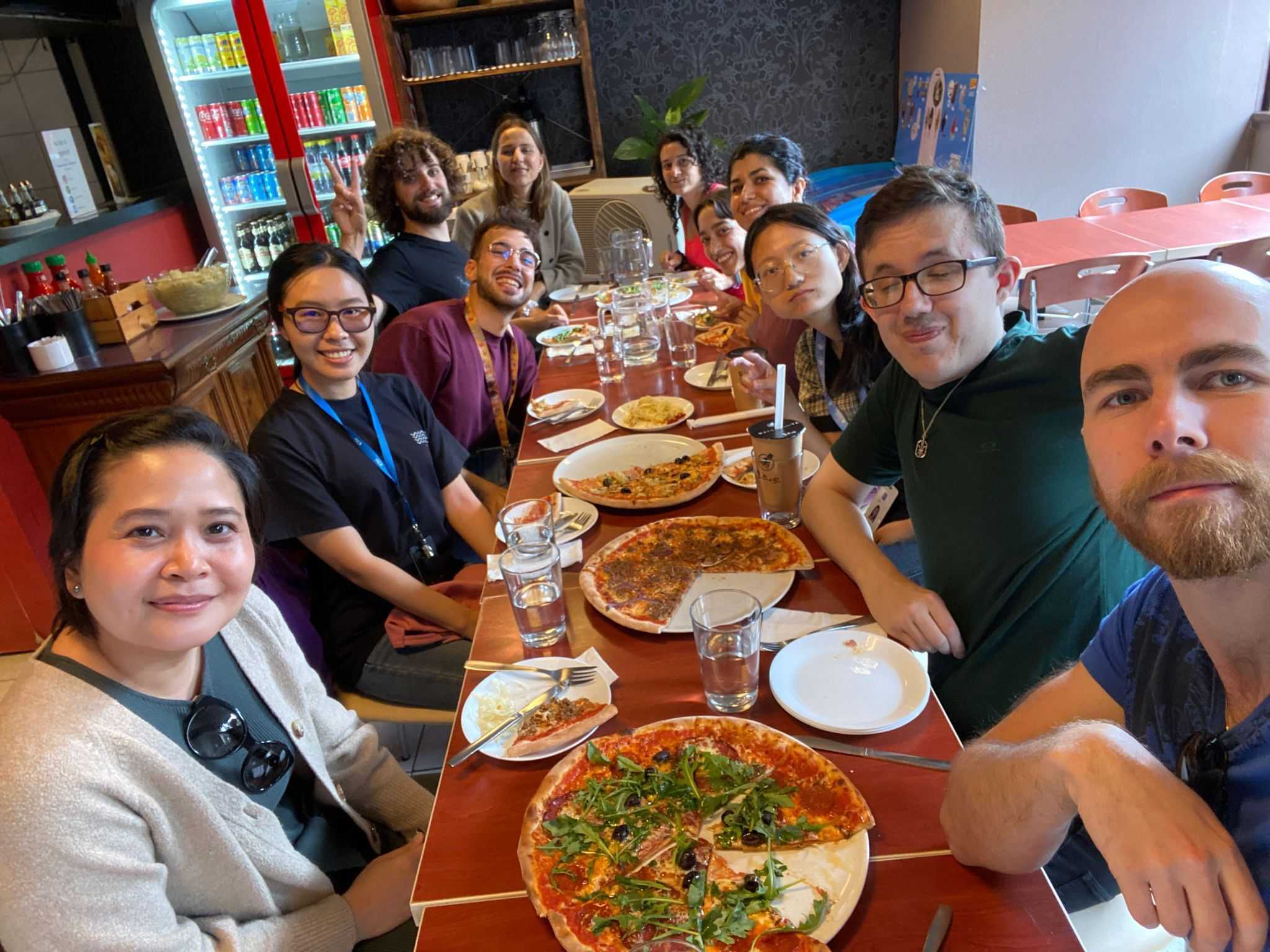
Although I have just started my PhD, I already feel so comfortable in the group. Seriously, everyone is super nice to me! And the best part is my supervisor is totally chill and approachable. So, I think I have a great start here and I’m pumped with all this positive energy to keep pushing through my PhD. Moreover, it’s not just about the awesome colleagues and the kind supervisor – I’m also part of the WWSC network! That means I’ll never feel alone during my PhD time. With both KTH and WWSC backing me up, I am looking forward to both academic and non-academic activities they have to offer. It’s going to be a wild ride, and I know it’s going to be so worth it. This whole experience will be incredibly rewarding.
Is there anything you are particularly nervous about?
As an easy-getting nervous person, yes! I’m really nervous when I need to talk to new people. It’s because I don’t know how to react and I like to observe how they are before I will be myself around them. So, this makes me a little bit slow in making new friends. And don’t even get me started on when all eyes are on me! Like, giving a presentation? Total nightmare! My nerves go through the roof. But hey, I’m working on it. I want to be more confident, especially now that I’m diving into this PhD thing. It’s a chance to grow and build up that self-assurance.
You are performing your PhD within the Wallenberg Wood Science Centre. Tell us about the research project you are going to be working on.
My research project is about “Discovery and application of microbes and enzymes to recycle and add value to pulp and paper sludge.” The pulp and paper industry has a huge problem due to the use of metals strong chemicals in its production processes – it leads to toxic sludge waste! And you know what they do with a lot of this waste? They have to just store it or dump it in landfills, causing serious environmental damage. Not cool at all! So, my mission is to find a sustainable way to clean up this mess.
With my background in microbiology and biochemistry, I’m excited to introduce the real heroes of this story: microorganisms! These tiny creatures are like a superhero team, and they have a special power – enzymes. These amazing enzymes can break down organic materials, such as cellulose and starch found in the sludge, into valuable sugars like glucose. And guess what we can do with that glucose? Convert it into a green alternative energy carrier – ethanol! How cool is that?
To track down which of these tough microorganisms are the best at their job and understand their secrets, I’ll be using high-throughput sequencing technology in my study. Once I identify these powerhouse species, I plan to apply them as biological tools to tackle sludge waste like never before! I truly hope my project can make a real difference and contribute to a cleaner and more sustainable future.

Previously you have worked in laboratories in Thailand and Japan. What was the difference between working in those two places? And how do you think Sweden compares so far?
Alright, let me spill the beans about my work experiences in Japan, Thailand, and Sweden.
When I was in Japan, people were all about hard work and dedication. I was like, “Okay, I gotta keep up with these guys!” So, I put in some serious effort too. I tried my best to maintain a work-life balance and not work on weekends. But as you can guess, it wasn’t easy to avoid it, hahaha! And academic events, they were serious business. I had to dress very formal and rock the black outfit to show some respect. But you know what? One thing I liked about the Japanese work culture was how everyone respected the rules. They were responsible people.
After working in Japan for two years, I moved to Thailand and it had a whole different vibe. Work-life balance was much better there. My Thai supervisor was cool with flexible working hours, which was great! Actually, not only time can be flexible, but also rules. Sometimes it is good if the rules can be flexible, but sometimes it’s not. It sounds great that something can be flexible, right? Well, don’t hurry to judge. A coin has two sides. I often got stressed in Thailand from overloaded work, traffic jams, and the darn air pollution, which I’m allergic to. I spent around four hours a day on the road to go to work and come back home. Those things were pretty tough for me.
But now, I’m in Sweden, and it’s like a whole new world! Work-life balance is great, the environment is good, and the work atmosphere is super chilled. No need to rush in the mornings because public transport is so convenient. And guess what? I don’t feel all exhausted after work either. This place is a real blessing for my well-being and mental health. I hope this positive vibe sticks with me throughout my entire PhD journey here!

A few short questions to get to know you…
What is your favourite kind of food? Steak and salad.
Do you prefer to read books or watch movies? Movies.
What is your favourite animal? Absolutely Cat!!! I have been a cat person since I was young.
What is the best advice you’ve ever received? Don’t compare yourself to others too much, but focus instead on comparing yourself to your past self.
What skill would you most like to learn? Swedish language.
Thank you Pakinee for telling us about yourself – we are happy to have you on the team!!
 Stockholm CAZyme Lab
Pingback: Year in review – 2023 | Stockholm CAZyme Lab