Author Archives: Lauren McKee

Welcome interview: PhD student Carlos Huertas Diaz

Carlos Huertas Diaz is a PhD student in our group. He started at KTH in September of 2025, and his work is mostly funded by the Swedish Research Council Vetenskapsrådet. Lauren McKee is his main supervisor, and he is co-supervised by Francisco Vilaplana at KTH and Johan Larsbrink at Chalmers University, Gothenburg.

Hi Carlos, and welcome to Stockholm! Congratulations on starting your PhD programme at KTH! You finished your Master’s degree just before summer and now you’re a doctoral student – how does it feel so far?

Hi Lauren! Thank you so much for this opportunity first of all. It feels unreal: I had literally just finished defending my Master’s Thesis and a few minutes later I got the offer of this PhD position, perfect timing! It’s a huge step in my career and a big challenge, but as we have talked about, I really want to keep learning and further researching, and this is just the perfect opportunity. So far I’ve felt super welcomed, the people at the Glycoscience Division feel like family already and this creates such a nice working environment where I can totally be myself.

What has been the biggest challenge or the most unexpected thing since you started at KTH?

Honestly the most challenging part was finding an accommodation, since I had no clue that Stockholm had such a high demand for housing and you had to be registered for queues before. And now being an employee that is still also a student: that has been a big transition from only being a student, where this is a total new environment and with much more responsibilities and where the start point feels different from being in a class with many other students (where everyone is as lost as you), to sharing an office with people working on many different things (where everyone is still lost, but lost individually). However, it feels very enriching to get to know about all these new topics. 

What are you most looking forward to in the coming four years?

I am so ready to learn more and be able to develop myself as a researcher! I wanted to continue studying because I still feel I have the motivation and I would really like to implement this knowledge at the same time, so a PhD was just perfect for these characteristics. It will for sure be a great challenge and with ups and downs, but I really want to dive deeper in research and be able to join the scientific community. Apart from that, traveling and exploring different facilities and working environments is something I would really like to do and I believe it can be very fulfilling, where you can meet great scientists who shape you and teach you along the way! I’m looking forward to my first conference next spring, and I hope we can plan for at least one research visit for me somewhere.

And is there anything you are particularly nervous about?

I am a bit nervous about publishing and writing manuscripts, since it’s new for me and as a mandatory part of the PhD it’s something I have respect for. I see it as a complicated process, where I will give my best to do as great as possible. I thought that I would be nervous about teaching and supervising Master students, but now I am feeling quite optimistic and looking forward to it. I think it will be real fun.

You are working now in the Division of Glycoscience, and there’s a lot to learn about carbohydrates and how we analyse them! Tell us a bit about the research project you are going to be working on.

In this project we will be working on the discovery, characterization, engineering and the application of carbohydrate-active enzymes (CAZymes) of microbial origin. We are aiming to explore the diversity of these enzymes encoded by industrial and environmental microbes. The main goal is to understand their activities and stability, exploring their application for industrial processes. Many recent studies propose that non-catalytic appended accessory domains such as the carbohydrate binding module (CBM) can stabilize CAZymes, but this is not really confirmed or understood, so we will test these hypotheses. For this project we are aiming to understand these inter-domain interactions and the stabilizing effects on the CAZymes so that stable industrial biocatalysis can be achieved.

Your previous research experience was at Lund University and before that in Spain. What was the difference between working in those two places? And how do you think KTH compares so far?

In Spain I did my Bachelor’s Thesis at the Center of Molecular Biology Severo Ochoa (CBMSO) in Madrid under the supervision of Aurelio Hidalgo. Then in Lund, Javier Linares-Pastén supervised my Master’s Thesis in the Biotechnology Division of the Engineering Faculty (LTH) of Lund University. They were both amazing experiences where I could settle myself into research. The main differences I would say were the authorship scale, where in Spain the gap between students and researchers or principal investigators is greater than the one in Sweden, where I felt professors were more easily approachable and students have more freedom of creativity in their project. Moreover, in Lund the facilities of the Kemicentrum, where I was performing my thesis, were more updated than the ones in CBMSO, so of course it was more accessible where the most resources were present. Here at KTH I see it so far as very similar to Lund University, with a super friendly and uplifting environment, where I can see myself improving as a researcher with great facilities and infrastructure.
A few short questions to get to know you…
What is your favourite kind of food? Empanada (I think the translation would be meat pie).
Do you prefer to read books or watch movies?  Movies, but a good book is always better.
What is your favourite animal?   The galaxy frog.
What is the best advice you’ve ever received? I live with this quote in my mind “journey before destination” where someone added “but in company”.
What skill would you most like to learn?  Further understanding mass spectrometry or nuclear magnetic resonance would be very cool.

Thank you Carlos for telling us about yourself – we are so glad to have you join the team!!

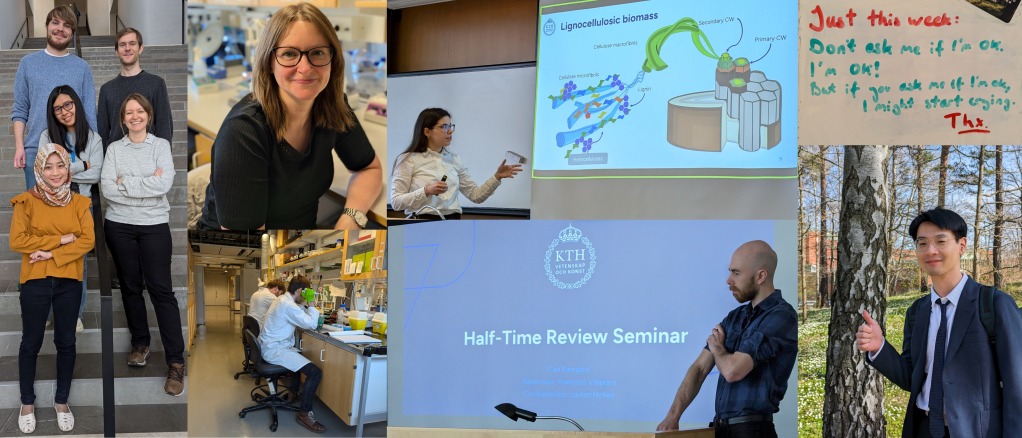
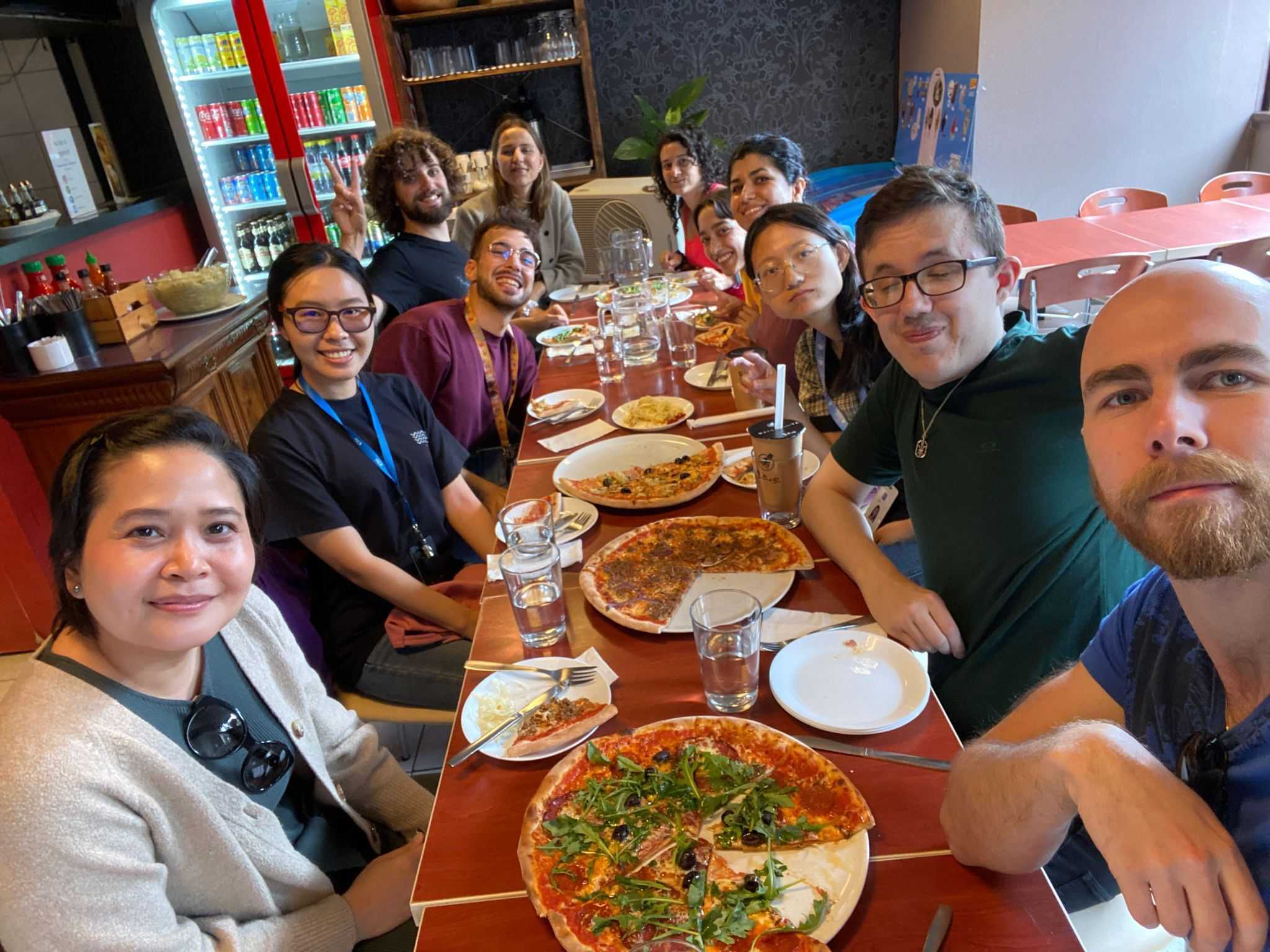
Group photo with Carlos and the rest of Lauren’s team  at AlbaNova (Carlos: I love this picture!).

PhD position available: Stable enzyme technologies for a sustainable bioeconomy

Note: the application process for this position closed in April 2025.

In brief: We have a PhD position available in our group, ideally to start in the autumn of 2025. Email Lauren with questions. Full details below.

Scientific goals: This doctoral research project focuses on the discovery, characterisation, engineering, and application of carbohydrate-active enzymes of microbial origin. We aim to explore the diversity of enzymes encoded by industrial and environmental microbes. Our goal is to understand their activities and stability, to explore their application in industrial bioprocesses. This fundamental research project will involve molecular biology, biochemistry, structural biology, and enzyme engineering. In addition, structural analysis of carbohydrates will be required. There is scope for creativity in this project, which can touch on diverse bioprocesses related to food, fuel, materials, and waste management. You will work closely with researchers at the Division of Glycoscience, the Stockholm CAZyme Laboratory, Chalmers University (co-supervisor will be Assoc Prof Johan Larsbrink), industrial partners in Sweden, and international collaborators.

Where we work: KTH Royal Institute of Technology in Stockholm is one of Europe’s leading technical and engineering universities, as well as a key centre of intellectual talent and innovation. We are Sweden’s largest technical research and learning institution and home to students, researchers, and faculty from around the world. Our research and education covers a wide area including natural sciences and all branches of engineering, as well as architecture, industrial management, urban planning, history and philosophy. The Division of Glycoscience is a multi-disciplinary department focussed on solving environmental and industrial challenges relating to sustainable production and usage of renewable natural resources, as well as advancing fundamental knowledge of complex carbohydrates.

The broader context: This project is supported by a grant the Swedish Research Council Vetenskapsrådet and builds on recent work in our group looking at the stabilisation of carbohydrate active enzymes (CAZymes) by non-catalytic appended accessory domains. In recent years we have generated much fundamental knowledge that now needs to be synthesised in a broad study to test the activity and stability of a large number of enzymes, to test our hypotheses. Our hope is to come to a sound understanding of inter-domain interactions and stabilising effects in order to design new molecular biology tools for enzyme stabilisation. As stable biocatalysts are needed in a range of different industries, this can have relevance for a number of aspects of the sustainable bioeconomy. You will join new and existing collaborations with (inter)national groups and we will together plan research visits

Education and skills development: Within the experimental work, you will gain or deepen skills in molecular biology, enzyme characterisation, carbohydrate chemistry, and protein engineering. Alongside your research, you will take doctoral courses at KTH and other Swedish universities, including online learning, lectures, and short lab projects. In addition, you will receive formal training in scientific writing and data visualisation. As part of your research, we will help you to write funding proposals to access additional financial support for travel and experimentation, giving you an even broader range of experience in science communication. I will also encourage you to write semi-regular pieces for this blog and to use other online channels to communicate with the public about your research.

Responsibilities as a PhD student: Your primary responsibility will of course be to advance the research project and to complete sufficient doctoral-level courses to earn the 60 credits you need to graduate. Your supervisors will help you to make sure you achieve these goals on time. In addition, you will spend up to 10 % of your time on Division/Departmental duties such as being responsible for a piece of equipment in the lab. Finally, you will take part in teaching younger students. The details of teaching are decided once the PhD has begun and the amount of teaching you do will be balanced against your other roles, but typically you will do some combination of lab teaching in a course for 1 or 2 years, supervising 1 or 2 MSc thesis students, and supervising 1 or 2 groups of BSc thesis students.

Eligibility for the position: To be eligible for this position, you should have a Master of Science or Engineering degree or equivalent qualification in a relevant subject area such as biotechnology. You should have completed a practical research-based (wet lab) thesis project. Documented proof of experience in areas such as molecular biology, biochemistry, and enzyme characterisation is appreciated but not necessarily required. Please email Lauren (find my email address at my KTH profile page) if you have queries about your eligibility for the role.

How to apply: You can find further specific details about this position on the official advert, available at this link: apply here. Please note that applications can only be considered if they are made through the KTH application portal, linked at the bottom of the advert. Informal applications made by email will not be considered. However, you are welcome to email Lauren if you have questions or are curious about this position.

Year in review – 2024

Hallo! This is Lauren again, writing our annual summary of lab activities. I guess it’s been a busy year behind the scenes, since I see this is the first blog post since 2023’s annual wrap-up! 2024 has been momentous for me personally since my efforts were focussed on securing a faculty position, aka finally getting myself a ‘real job’. After a competitive application and interview process, I am delighted to have been awarded the post of Associate Professor in Cell Wall Biochemistry at KTH Division of Glycoscience, allowing me to continue in my current department while taking an important career step. The process of applying and interviewing for this job (and similar posts in three other universities…!) has been incredibly draining, and dominated my activities to a significant extent. So I am happy to have had a great team around me whom I could rely on to keep things bubbling away in the lab. The year ended beautifully with warm feelings and celebratory moments: we caught up with friends at the WWSC Winter Workshop, I attended the PhD graduation ceremony at Stockholm City Hall, everyone gathered for a special fika to congratulate me on my Assoc Prof appointment, and then our Division hosted the Departmental Christmas party 🙂

Research

The most significant research news this year was our Nature Communications paper about family 92 carbohydrate binding modules, which you can also read about on the family’s CAZypedia page. This was a hugely important collaborative work from our team with invaluable contributions from Scott and Johan at Chalmers University, and it’s already opened some doors towards additional new collaborations. And, judging by the peer review requests I get now, I am officially “that CBM lady” (I’m okay with it). Towards the end of 2024, Pakinee and I started working on the first manuscripts from her PhD project, which we can hopefully share with you next year!

Students

Pakinee’s PhD is in full swing. She has made tremendous research progress this year, completed a lot of KTH courses and attended two week-long schools with the WWSC Academy. Erik’s Master’s thesis project was tough but taught us a lot about construct design in our engineered enzyme-CBM proteins. His work was within the context of the newly funded Vetenskapsrådet project that began January 2024. Simon joined us after summer to begin a 6-month Erasmus-supported thesis project – another tricky one, testing his protein production skills and giving him a chance to learn carbohydrate analysis. We hosted Niendy, a guest PhD student from Thailand, for three months in Autumn, where she aimed to produce and characterise three CBMs from a bizarre multi-modular GH5 enzyme that shows activity on multiple polysaccharides (CBM-depending, I believe). Niendy’s supervisor Assoc Prof Patthra Pason came for a week-long visit in November, and it was great fun to show her around as well as attending her various seminars in Stockholm. Finally, we were joined in the Autumn term by Christian for a short project, which he will resume in January for his Master’s thesis, looking at fungal cell wall-degrading CAZymes.

Two of the PhD students I co-supervise (both in Francisco Vilaplana’s team at KTH) passed their half-time evaluations this year, I joined the supervisory teams of some more students both at KTH and Chalmers, and we had a few PhD defences as well. It’s really fulfilling to have even a small role in the learning journeys of these brilliant young researchers.

Funding

I was so focussed on applying and interviewing for faculty positions this year, I was kind of too burned out to write a lot of big funding applications myself. However, several collaborative funding proposals were granted with partners at KTH and Chalmers University and right at the end of the year, we got news of an award from Mistra that will support new ventures in the pulp and paper sludge research project, this time collaborating with my good friend Dr Ulrike Schimpf of Stockholm University.

Innovation

Big changes at the spin-off start-up company Glycolink AB! Early in the year, I successfully pitched to private investors and secured funds that allowed us to recruit a new CEO for the company – make sure you follow us on LinkedIn to chart our progress now that Martina Banyay is at the helm! With Martina taking over the role of managing director, I have been able to transition to the much more comfortable position of Chief Scientific Officer (CSO), to which my skills are better suited. Martina is currently seeking investment to build our team and reach commercial status. Towards the end of 2024, we recruited Lovisa Brandt, a former Master’s thesis student from this group who went on to work at EnginZyme for several years, as Senior Research Engineer. She will be driving our biochemical discovery and formulation development work, as well as standardising our protocols and documentation.

Looking ahead

Since 2024 will be my first full year as Associate Professor, I’m both excited and trepidatious about what’s to come. It’s true that myself and my team will have more institutional support and that I’m able to think more long-term about how to build and maintain the group. I also foresee a lot more responsibilities now that I am a full member of the senior faculty. For example, I will have a role in assessing colleagues applying for Docent habilitation, and I’ll be a co-supervisor for at least 8 PhD students in other groups!

When I was offered the position of Assoc Prof at KTH, my Head of Department Istvan gave me some great advice that I will try to keep in mind. In the past few years as Researcher, I have had to work hard to make myself visible, jumping up and down to volunteer for things to flesh out my CV and be eligible for senior faculty roles. Now that I have my position, such responsibilities will naturally flow my way, so I need to learn to be more selective in which tasks I agree to.

I’m hoping to grow the team a bit in the coming years, and to develop new collaborations from a more stable basis at KTH. Please don’t hesitate to get in touch if you see a way for us to work together 🙂

Some good times with the WWSC this year – cheers to many more ahead!

Year in review – 2023

So, farewell then, 2023. I would describe you as having not enough vacation and too much weather.

This is Lauren writing another annual reflection of the highs and lows of life in our lab. It’s for sure been a busy year, with a lot of student projects, funding applications, travel in and beyond Sweden, and some big changes to the team. Constantly being occupied by new tasks or assignments means it can be easy to forget that some big things have happened this year. In the summer I travelled to Boston to attend the Gordon Research Conference on carbohydrate-active enzymes, where I gave an invited lecture and I hosted the Power Hour. I was both honoured and a bit intimidated when the conference organisers Tina and Nicole invited me to volunteer to organise the Power Hour session, but I think it went really well and I managed to encourage open discussion about some thorny topics. Maybe I will write a blog about that soon…

2023 also saw the beginning of the new phase of the Wallenberg Wood Science Centre PhD Academy, of which I am a vice director. There is lots of work to be done to create a compelling programme of doctoral courses for the ~50 students enrolled in the WWSC Academy, but it has been fun so far getting to know this generation of participants, and to make contact with teachers and people working in the forest industry all around Sweden. We have some exciting schools and site visits planned for the years ahead!

A small victory I am especially proud of this year – I installed some “panta” boxes in the lunch room and office areas so we can collect recyclable cans and bottles to exchange for a little bit of money. We have been able to use the income to buy ice cream for everyone on the hottest days of summer, to stock up on “emergency” lunch foods, and to liven up lunchtime with olive oils and salad seasonings. Small gestures that nonetheless bring a good feeling to the lab at lunch and fika time – and it is fun to go on the recycling expedition with a huge bag of drinks cans!

Lots to celebrate this year – victories big and small 🙂

Research

We really did well with publishing our data this year! I am so proud of the team, especially Heli and Ioanna, for bringing several projects to a satisfying resolution. On the enzyme discovery side of things, we wrote in FEBS Journal about a few pustulan-hydrolysing enzymes (most of which were not particularly efficient), in Biochimie we relayed some observations about enzyme stability, and in mSphere we described a natural cocktail of enzymes that can break down complex fungal biomass. Read more about that last paper at this link.

This year also saw several publications from Ioanna’s work on lignin. In the journal Plant Direct she revealed lignin structures secreted by plant tissue cultures, in ACS Sustainable Chemistry & Engineering she described a mild lignin extraction protocol optimised for hardwood, and in Industrial Crops & Products she showed that her sustainably extracted lignins can be used directly for making nanoparticles. Ioanna has written blog posts about these papers, which you can find here and here.

Excitingly, we also started a brand new project this year! With financial support coming mostly from the Wallenberg Wood Science Centre we are investigating the microbiome of various sorts of pulp and paper sludge wastes generated at mills in Sweden. This forms the basis of Pakinee‘s PhD thesis. We hope to find some interesting activities so we can eventually develop ways of using microbes or their enzymes to deal with the huge accumulation of sludge wastes in Sweden and elsewhere. A parallel project at Chalmers University in the group of Assoc Prof Johan Larsbrink is also running, again with financing from the WWSC, where PhD student Facundo Ortega is examining the microbiome of tree bark, another major industrial waste stream.

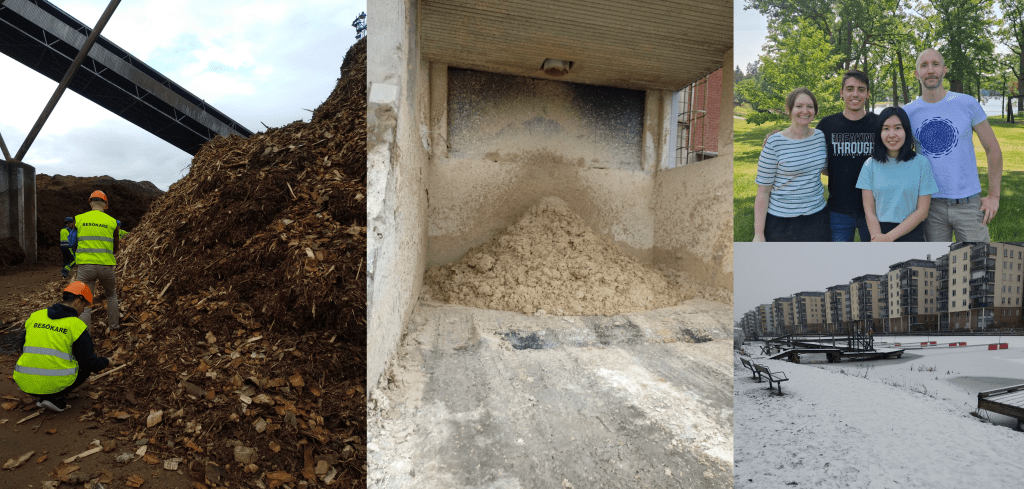
Getting out of the lab! 2023 was a good year for field trips, sampling for a student course project on water quality and for Pakinee and Facundo’s PhD studies.

Students

The big event of 2023 was Ioanna Sapouna’s PhD defence, which went extremely well! She blogged about the defence and how it feels to be moving on from studying at this link. At the Master’s level, Heli and I supervised a trio of fantastic students – Ida, Felise, and Rasmus worked on diverse projects but formed an amazing team and really supported each other through the project timeline. I also supervised Elin who was developing plant-based dairy products in Uppsala. Our guest Erasmus student Theresa Schaufler also completed her thesis work in the summer – she will defend and graduate back home at BOKU in Vienna in early 2024.

Recruitment

Our new PhD student Pakinee Thianheng arrived in June – you can read her first thoughts about studying in Sweden in this interview. We recruited recently graduated Master’s students Rasmus Gustafsson and Felise Elemia Freire to work as research engineers over the summer, and both have subsequently gone on to find full-time work in the biotech sector, at EnginZyme and AstraZeneca respectively.

Otherwise our team has been shrinking a bit this year – Mengshu’s post-doctoral period came to an end in the spring, Ioanna defended her PhD in June, and Heli started a new position in October, which she writes about in this post. However, we are recruiting a post-doctoral scholar who will hopefully begin work before the summer, and we will be joined by Erik Estreen for his Master’s thesis in the spring term!

When you work in the same place for as long as I have, you do realise that academic life is filled with constant hellos and goodbyes…

Funding

Seeking financing to support our work is always a challenge, and proposal writing is the main focus for a few months of every year. In 2023 I made it my mission to get resources to support Pakinee’s PhD project, so that she is not limited in what she can do. Her project scope is quite broad as she aims to discover new microbes and new enzymes from industrial waste, so there are a range of different potential experiments to be done. I am happy to say that several funding agencies showed an interest in the work, and we secured grants of various sizes from the KTH Life Science platform, the Lundström foundation, and ÅForsk to help buy needed equipment and to finance sequencing experiments. Pakinee also secured a travel scholarship from ÅForsk so we can attend a conference in 2024. And towards the end of the year I was delighted to be awarded funding for a 4-year project from the national research council Vetenskapsrådet. I’ll be looking into some aspects of enzyme stabilisation to better understand inter-domain interactions in modular proteins, the importance of linker length and sequence, and maybe some new routes to engineering enzymes for stability. This project is also a chance to collaborate with the company EnginZyme.

Innovation

My start-up company Glycolink hit an important milestone this year as we secured our first small investment, bringing KTH Holding AB into our team. Big thanks to Daniel Carlsson, our business coach at KTH Innovation and our contact person at KTH Holding. We also had some assistance this year from the Stockholm Material Hub, who helped us secure experimental support and commission a market research survey. Together with some pitching events I took part in, this put us in touch with some major companies working in the cosmetic and healthcare markets, so a priority for 2024 is to secure those connections into working partnerships, build our team on the technical and business sides, and secure a larger investment that will help us through the next year or so of activity.

Looking ahead

The autumn semester of 2023 was an intense period for me personally, with lots of short-notice tasks coming up that drew my attention from some longer term goals. We still have one in-review paper that I need to resubmit (I swear I am this close to getting it finished, guys!!), and the teaching prep that I normally like to do in December was still on my to-do list in January. I hope that 2024 will allow me to be more focussed and deliberate in my work. After their respective periods of maternity leave, Mengshu and Ioanna are both starting new positions this coming year, and we wish them both the best of luck! Pakinee and I plan to attend the 2024 Carbohydrate Bioengineering Meeting to introduce her to the wider CAZy community – we hope to see you there!

I had the chance to visit a number of different university campuses around Sweden this year.

Moving on: PhD student Ioanna Sapouna

Ioanna Sapouna is a PhD student in our group. She has been working within a national network called the Wallenberg Wood Science Centre (WWSC), and is part of the WWSC PhD Academy. Ioanna defended her doctoral thesis at KTH Royal Institute of Technology on June 14th 2023.

Hi Ioanna! Huge congratulations on the completion of your PhD, it is such an achievement! How do you feel now that you have cleared this milestone?
Thank you so much Lauren! It took me a while to realise yet that it’s over! I am glad I made it and I am trying to digest the fact of graduating as the days pass.

For those who are not working in the Swedish university system, can you tell us what happened on the day of your PhD defence?
It was a great day! In the morning, the defence started with a presentation from my opponent Prof. Claudia Crestini, who gave a short presentation about my work and showed how it fits in the lignin chemistry field. After that, I presented my work. This was followed by a discussion with my opponent on my thesis work – I must say, I enjoyed that part. The faculty committee asked questions next. I was honoured by having Assistant Prof. Mika Sipponen, Prof. Ola Wallberg, and Prof. Monika Österberg as my committee members. That was the public part of the defence. After that, the committee privately discussed and decided that I passed the exam. The announcement was held at the WWSC workspace, in front of my colleagues, friends, and family who were there with me. Quite an emotional moment! After the defence I had lunch with the committee and a party in the evening. It was a real celebration! 

We always try to make sure that dissertation events are meticulously planned, but was there anything that surprised you on the day?
In the PhD defences at KTH, there is always someone from IT helping set up the webinar, making sure the electronics are working, and so on. All worked fine up to the moment the presentations started! PowerPoint suddenly stopped changing slides during Prof. Crestini’s presentation and my pointer stopped working during my presentation. That was a bit stressful in the moment but thinking about it now it might have actually helped dissipate the tension. Also, at some point the lights randomly turned off, probably because of a timer or something like that, and one of my committee members said “Oops! Time’s up!” That was funny and helped me relax a bit.

Let’s talk about the research you performed for your PhD. What was the overall goal of your thesis?
The overall goal was to explore fundamental aspects of native lignin, such as its structure, polymerization and interactions with the other components of the plant cell wall. I’ve written about some of the published work that went into the thesis in blog posts here on this website 🙂

Do you feel like you answered all the research questions that you wanted to address? Or are there some aspects of lignin structure and synthesis that still really make you curious?
Many of the topics I explored have been controversial for several decades now. We tried to come closer to answering some of the bigger questions and I believe our work did make a small contribution towards that goal. Of course, there are more aspects to be explored and questions to be answered, and if I could continue this research for four more years, I would still have a lot to do! However, I am happy with the work we have done and everything I learnt these past years.

What was the most surprising thing you found out during your research these past four years?
It is quite common in the field to talk about lignin heterogeneity and how the structure of the polymer is very different from plant to plant, and even between different parts of the same plant. This is true. For example, if you are trying to find repeating units in lignin or a specific sequence in its building blocks, it’s not going to happen. But, at the end of the day, “lignin is just lignin”. Its precise structure and properties might depend on different parameters but when we analyse it we are considering averages of the different structures we find in the plant, so the impact of extraction for example turns out not to be that pronounced. It might seem logical now, but it was a big moment of realisation for me looking at all of my data and expecting to see bigger differences between samples.

PhD students at KTH need to take a lot of courses during their programme, and you also took part in the PhD Academy Programme offered by the Wallenberg Wood Science Centre, which financed your work. Was it ever challenging to balance your time between research and courses? If so, how did you manage that?
Absolutely it was! (laughing) You can plan your experiments and be very well organised but one of the most important things my studies taught me was that experiments can really go sideways. When this happens, which is absolutely fine by the way, you can wave your schedule goodbye! In these situations, it was really hard to also handle all my other responsibilities, for example maintaining certain lab equipment, or attending the courses and workshops of the Academy. But you learn something from every situation. Prioritisation is the only way to manage. I needed a lot of help with this, especially in the beginning, but I think I got better at it. Also, getting used to budgeting time for things to go wrong helped me! It might sound strange or even pessimistic, but many times I struggled with an overloaded schedule and having ‘spare’ time allotted to repeat failed experiments really helped.

And what do you think is the most important skill you have gained during your doctoral studies?
As I had no prior experience with lignin chemistry before my PhD, each project was a step out of my comfort zone. Due to certain events along the way, there were times where I felt I was stepping further and further away. If I have to choose a favourite skill, I would say NMR analysis. I absolutely loved working with this technique. But a PhD is not only about technical skills. For example, I also learnt how to adapt to different situations and overcome difficulties that I couldn’t even imagine before I started. 

Is there anything you will miss about this period in your life?
This was the last time I held the title “student”. I will continue learning throughout my career, but the “official” part is over. If you think that for the largest part of my life I’ve been studying, it is a big change. I am not sure I will miss it, but definitely it will take some time to adjust. 

If you were able to go back in time and tell yourself something to make you better prepared for the PhD journey, what do you think it would be?
“It is OK to fail”. This was the most important lesson of my doctoral studies. Experiments occasionally fail, planning doesn’t always work out the way you thought – not to mention about bigger changes and situations completely out of your control. Starting my PhD with the mentality that things don’t always go the way you thought they would be could have made things a bit easier to handle.

Ok, let’s look to the future now. It has been a couple of months since you defended your PhD, so what are your next steps?
I would love to continue my journey in research and preferably continue working with lignin. And I just had a baby! So after maternity leave, I plan to do a post-doc in the lignin field and I would like to focus on material applications. I feel that during my PhD I got a broad, theoretical background on lignin and now I want to apply this knowledge and do something more tangible.

What are you looking forward to the most?
There have been so many changes in my personal and professional life the past few months that I don’t even know where to start! The coming months will for sure be exciting and I want to be open to all the different experiences coming up.

Finally, do you have any words of advice for future PhD students at KTH or other universities?
I’ve heard this before from another PhD student and I truly felt it during my studies: If you are not certain about pursuing a PhD, don’t do it. There are ups and downs throughout these years that will challenge you in every way possible. I don’t think I would have made it if I didn’t really want this. But if you decide to go for it, then try to experience all the high highs and the low lows because four years go by surprisingly fast!

Thank you Ioanna for the interview, and for all the hard work over the past few years. We will miss you at KTH, but we know you are moving on to bigger and better things – we can’t wait to see what you can achieve!!

Enzymatic deconstruction of complex carbohydrate cell walls in the soil

A Polysaccharide Utilisation Locus from Chitinophaga pinensis simultaneously targets chitin and β-glucans found in fungal cell walls. Lu Z*, Kvammen A*, Li H, Hao M, Bulone V, McKee LS. mSphere 8 (2023) e00244-23 *Authors contributed equally and share first position

I have been scientifically obsessed with bacteria from the Bacteroidetes/Bacteroidota genus for a long time. Even when I have spent time researching diverse other topics like sterol metabolism, potato pathogens, cell wall synthesis, and lignin structure, I keep coming back to work on these brilliant bacteria.

The Bacteroidota are a dominant group in the microbiomes of essentially every ecosystem where complex carbohydrates (glycans) are found – this includes the human gut, the rumen, the soil, and the ocean. They thrive in these diverse ecosystems despite difficulties like high competition from other species or low substrate concentration making it hard to grab nutrients. They do so well because they have certain adaptations that enhance their survival fitness. First among these has to be the Polysaccharide Utilisation Loci in their genomes, which we generally refer to as PULs.

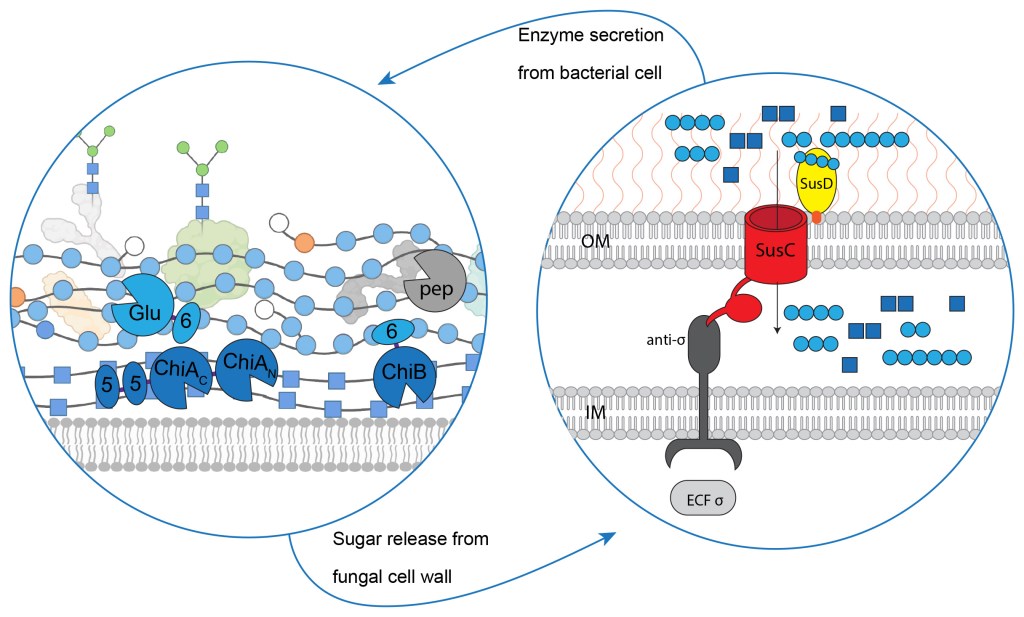
As has been written in a number of excellent reviews and book chapters (including some that I have contributed to), a PUL is a discrete contiguous set of genes that encode the protein elements a bacterium needs to metabolise a certain glycan. On the outer membrane of the cell, we find a pair of proteins called SusC-like and SusD-like proteins – these work together to recognise specific glycan structures and bring them into the periplasm (the space between the outer and inner cell membranes). The glycan brought into the periplasm gets recognised by a protein on the inner membrane, which sends a signal to the DNA. This leads to a major increase (upregulation) of gene expression for all of the genes in the PUL. Importantly, this includes genes encoding enzymes that can work together to deconstruct the activating glycan into sugars small enough to be brought into the cell and metabolised.

This system is extremely elegant. And it is an effective energy-saving tool. Many of the enzymes that are used by bacteria to deconstruct complex carbohydrates are large modular proteins, and they often have to be secreted outside of the cell to reach their substrate. This is an energy-expensive process, and it would be wasteful to secrete big enzymes if their substrate were not available. So including these genes within a PUL means that the enzymes only get produced when their substrate is present. Neat! In many cases, researchers have suggested that PULs give bacteria a competitive advantage over other species as it lets them grab onto substrates and hoard them so other species can’t access the nutrition. Rude!

The first PUL to be studied was the now-canonical Starch Utilisation System (SUS), in the lab of the incredible Prof Abigail Salyers. Examples have since been characterised that target polysaccharides as diverse as chitin, xyloglucan, xylan, mannan, and more. These PULs share a number of features – they all have the SusC-like and SusD-like outer membrane proteins, gene expression is activated by the glycan substrates of the PUL, and the enzymes encoded act synergistically to degrade that glycan. This past summer, we published an article that showcased a PUL that I find interesting because it breaks this trend just a little bit, by encoding enzymes that target two different polysaccharides. Like many of my recent and ongoing enzyme discovery projects, this PUL was first identified as a target for characterisation in a paper I published in Applied & Environmental Microbiology in 2019 (https://doi.org/10.1128/AEM.02231-18), in which I announced that my favourite bacterium is and will always be Chitinophaga pinensis.

A figure showing our hypothetical model for how the Fungal Cell Wall Utilisation Locus works. Taken from our publication in mSphere, see https://doi.org/10.1128/msphere.00244-23 for the full paper.

Our new paper was published in mSphere in July 2023 (https://doi.org/10.1128/msphere.00244-23). The first author on the paper is Zijia Lu, who did a 60-credit Master’s thesis project in my group as a guest student from Uppsala University. Zijia was incredibly productive during her entire time in the lab and had already published two other articles that included her work (published in FEBS Journal and mBio). Her main goal for her thesis was to explore enzymes produced by Chitinophaga pinensis that may be involved in degrading or attacking the cell walls of fungi or oomycetes, principally the cell walls of plant pathogenic species. The idea was that, if we could find enzymes that attack pathogen cell walls, we may be able to use C. pinensis as a biocontrol weapon against plant disease. But first, extensive biochemistry was called for.

The PUL we were looking at encodes three enzymes, all of which contain both catalytic domains (glycoside hydrolases, GHs) and non-catalytic domains (carbohydrate binding modules, CBMs). We looked at the protein sequence and family annotation of all of these domains, then tried to produce them in different combinations to understand their activities. One enzyme (CpGlu16A) was predicted to be able to hydrolyse beta-glucans, and carried a CBM we predicted would bind the same glycan – and those predictions were right! When a CBM binds to the same polysaccharide as its enzyme partner is hydrolysing, we tend to see that the enzyme works better and/or faster, because it sticks to its substrate for longer. This was also the case for another enzyme in the PUL (CpChiA), where the GH domains were predicted to hydrolyse chitin and the appended CBMs predicted to bind chitin. Again, the predictions were accurate. Zijia did a huge amount of work to understand these enzymes, but an annoyingly persistent global pandemic broke out while she was visiting family in China, so things were put on hold and ultimately the project was not completed by the time Zijia had to submit her thesis.

In October 2021, our lab was joined by Alma Kvammen, a powerhouse Research Engineer who always had the energy to jump into new projects. She helped us complete a lot of different initiatives, including Zijia’s PUL. The third enzyme in the PUL (CpChiB) was intriguing – we correctly predicted that the enzyme domain would hydrolyse chitin, while the CBM would bind to beta-glucan. As you would expect, this means that the CBM gives the enzyme no advantage in hydrolysing chitin. But we must always remember that, in nature, polysaccharides do not exist as isolated purified molecules – they exist embedded within highly complex cell wall matrices. Chitin and the kinds of beta-glucan our enzymes are targeting are found specifically in fungi, and we think the PUL we characterised most likely targets intact fungal cell walls. Earlier work had shown how enzymes targeting pectin or hemicelluloses in plant cell walls can be made to work more effectively on intact plant biomass if they are attached to cellulose-binding CBMs, and we think our beta-glucan-binding chitinase is an example of the same phenomenon!

The last key element that defines a PUL is that its enzymes should work synergistically to break down the substrate. Alma prepared a fungal cell wall extract from button mushrooms (Agaricus bisporus) to see how the enzymes behaved when mixed together. The extract was a highly condensed material, due to the preparation process, and so enzyme accessibility was probably quite low. This meant that the release of reaction product by the enzymes was also low. Nonetheless, Alma was able to show that the enzymes do a better job of breaking down the fungal cell wall when they work together, rather than when they are alone. So all in all we are confident in saying that the Fungal Cell Wall Utilisation Locus (FCWUL) fulfils all the criteria of a classical PUL, except that it can target a more complex substrate. Next step is getting back to Zijia’s initial question – can these enzymes work together to kill a fungus? That might be a question that runs over several Master’s thesis projects…

Zijia Lu now works at EnginZyme in Stockholm, Sweden, while Alma Kvammen is working at ArcticZymes in Tromsø, Norway. Two brilliant enzymologists and biotechnologists, productive and professional in every way.

Post-doctoral position available: Defining the material properties of a fully bio-based hydrogel

Note: the application process for this position closed in October 2023.

Note: this is a scholarship position funded by the Carl Trygger Foundation. The successful applicant will be the direct recipient of a tax-free stipend. As such, for tax reasons, it is not possible for current or recent employees (i.e. PhD students or post-docs) of KTH Royal Institute of Technology to apply for this position. Sorry!! Please read the following in its entirety before getting in touch…

In brief: We have a post-doctoral position available in our group, with a start date of early 2024, focussed on hydrogel characterisation. Full details below. The position offered is for, at the most, two years. Email Lauren McKee with questions. To apply, send the following items to Lauren by email: a 2-page CV, a 2-page cover letter detailing your previous scientific work experience and your interest in this position, and contact information for at least two referees. Application deadline October 16th.

Scientific goals: We have developed a new method to produce hydrogels from polysaccharides that avoids the chemical synthesis and fossil-based polymers often used in current manufacture. Using small proteins that bind to specific carbohydrates, we can produce viscous formulations and stable hydrogels in mild conditions by cross-linking polysaccharides. This represents a sustainable route to biomaterials formation, promoting materials innovation and a transition to a circular economy.

A hydrogel is a cross-linked matrix of long polymer chains locked into place in a network structure that holds large amounts of water, and is highly absorbent. While the hydrogels used in many applications are still made using synthetic or fossil-derived polymers, manufacturers are increasingly searching for sustainable alternatives, and are turning to biological polymers as a viable alternative. Polysaccharides are an excellent choice, but there is often a need for chemical modification to induce cross-linking and gel formation. Our protein-mediated system avoids this problem.

We have come a long way in understanding the biochemical aspects of our system. To progress beyond this stage, our team of enzymologists and molecular biologists needs to be joined by an expert in materials science and polymer chemistry. This post-doctoral scholar will characterise our hydrogel and optimise our production process, with both material quality and process sustainability in mind, to develop specific product ideas that can be tested at lab scale. We recently installed an advanced HR-20 rheometer, so there will be an emphasis on rheology and viscometry, but a wide range of hydrogel characterisation techniques will be needed.

Where we work: KTH Royal Institute of Technology in Stockholm is one of Europe’s leading technical and engineering universities, as well as a key centre of intellectual talent and innovation. We are Sweden’s largest technical research and learning institution, home to students, researchers, and faculty from around the world. Our research and education cover a wide area including natural sciences and all branches of engineering, as well as architecture, industrial management, urban planning, history, and philosophy. The Division of Glycoscience is a multi-disciplinary department focussed on solving environmental and industrial challenges relating to sustainable production and usage of renewable natural resources, as well as advancing fundamental knowledge of complex carbohydrates.

Training and skills development: A position as a postdoctoral scholar is a time-limited qualified appointment focussing mainly on research, intended as a first career step after a doctoral dissertation. You will be invited to take part in the co-supervision of Master’s thesis students, gaining experience in the training of younger researchers. You will be using soft material characterisation skills gained during your doctoral studies, but you will also be encouraged to learn new analytical skills through collaboration or formal training courses. This position will also be a step up in independence, as you will be responsible for proposing appropriate experiments and developing protocols for our group.

Responsibilities as a post-doctoral scholar: You will bring experience in soft materials characterisation, and you will be expected to both suggest and perform the most suitable experiments to characterise the materials. Our goals are to understand the intrinsic properties and potential uses of our materials, and to benchmark them against other materials. You will be encouraged to identify relevant infrastructure at other laboratories in Stockholm/Sweden and to initiate collaborative contact with relevant groups. You will also be jointly responsible for maintenance and upkeep of our rheometry equipment, and to train other users of the machine.

Eligibility for the position: You must have a doctoral degree or equivalent qualification, obtained within the last three years prior to the application deadline. Relevant topics include polymer chemistry and materials science, though you must have experience of working with biological polymers such as proteins and/or polysaccharides. Some awareness and training in biochemistry is a merit. You should be skilled in the characterisation of soft materials such as hydrogels for diverse applications. You should have a strong understanding of sustainable development and its relevance for this field. You must have strong written and oral communication skills in the English language. You should have a good ability to work independently and as part of a team.

How to apply: Send the following items to Lauren by email: a 2-page CV, a 2-page cover letter detailing your previous scientific work experience and your interest in this position, and contact information for at least two referees. In your application, please describe the soft material characterisation skills and methodological knowledge you can bring to this project. Application deadline October 16th.

Welcome interview: PhD student Pakinee Thianheng

Pakinee Thianheng is a PhD student in our group. She started at KTH in June of 2023. Lauren McKee is her main supervisor, and she is co-supervised by He Li at KTH and Johan Larsbrink at Chalmers University, Gothenburg. She will be working within a national network called the Wallenberg Wood Science Centre, and is part of the WWSC PhD Academy.

Hi Pakinee, and welcome to Sweden! Congratulations on starting your PhD programme at KTH! You arrived in Stockholm on June 1st – how does it feel to be here so far?
Thank you for your warm welcome! Since I have been living in Stockholm, Sweden for almost two months, I have definitely loved it here. The weather has been pretty good. Maybe, it’s because I luckily arrived here in summer. The city looks lively with people going out and I also enjoy going out to explore the city too. 

What has been the biggest challenge since you arrived in Sweden? Have you experienced any big culture shock so far?
I think the biggest challenge for me, right now, would be how to quickly get a bank account and a BankID (the online/app system we use in Sweden for pretty much everything official and semi-official). Can you believe it’s been almost two months since I got here and I still don’t have one? It’s making my life a real hassle, you know? Everything in Sweden seems to require some online process or app, and without that BankID, I feel like I’m missing out on so much. I gotta say, dealing with this has been a big culture shock for me so far, admin seems very slow, especially during summer.

How do you feel about starting your PhD? What are you most looking forward to?
Although I have just started my PhD, I already feel so comfortable in the group. Seriously, everyone is super nice to me!  And the best part is my supervisor is totally chill and approachable. So, I think I have a great start here and I’m pumped with all this positive energy to keep pushing through my PhD. Moreover, it’s not just about the awesome colleagues and the kind supervisor – I’m also part of the WWSC network! That means I’ll never feel alone during my PhD time. With both KTH and WWSC backing me up, I am looking forward to both academic and non-academic activities they have to offer. It’s going to be a wild ride, and I know it’s going to be so worth it. This whole experience will be incredibly rewarding.

Pakinee having lunch with other members of the KTH DIvision of Glycoscience this summer.

Is there anything you are particularly nervous about?
As an easy-getting nervous person, yes! I’m really nervous when I need to talk to new people. It’s because I don’t know how to react and I like to observe how they are before I will be myself around them. So, this makes me a little bit slow in making new friends. And don’t even get me started on when all eyes are on me! Like, giving a presentation? Total nightmare! My nerves go through the roof. But hey, I’m working on it. I want to be more confident, especially now that I’m diving into this PhD thing. It’s a chance to grow and build up that self-assurance.

You are performing your PhD within the Wallenberg Wood Science Centre. Tell us about the research project you are going to be working on.
My research project is about “Discovery and application of microbes and enzymes to recycle and add value to pulp and paper sludge.” The pulp and paper industry has a huge problem due to the use of metals strong chemicals in its production processes – it leads to toxic sludge waste! And you know what they do with a lot of this waste? They have to just store it or dump it in landfills, causing serious environmental damage. Not cool at all! So, my mission is to find a sustainable way to clean up this mess.

With my background in microbiology and biochemistry, I’m excited to introduce the real heroes of this story: microorganisms! These tiny creatures are like a superhero team, and they have a special power – enzymes. These amazing enzymes can break down organic materials, such as cellulose and starch found in the sludge, into valuable sugars like glucose. And guess what we can do with that glucose? Convert it into a green alternative energy carrier – ethanol! How cool is that?

To track down which of these tough microorganisms are the best at their job and understand their secrets, I’ll be using high-throughput sequencing technology in my study. Once I identify these powerhouse species, I plan to apply them as biological tools to tackle sludge waste like never before! I truly hope my project can make a real difference and contribute to a cleaner and more sustainable future.

Pakinee in the lab and in the city. The summer nights in Stockholm are long, so it is a good time to explore after work!

Previously you have worked in laboratories in Thailand and Japan. What was the difference between working in those two places? And how do you think Sweden compares so far?
Alright, let me spill the beans about my work experiences in Japan, Thailand, and Sweden.

When I was in Japan, people were all about hard work and dedication. I was like, “Okay, I gotta keep up with these guys!” So, I put in some serious effort too. I tried my best to maintain a work-life balance and not work on weekends. But as you can guess, it wasn’t easy to avoid it, hahaha! And academic events, they were serious business. I had to dress very formal and rock the black outfit to show some respect. But you know what? One thing I liked about the Japanese work culture was how everyone respected the rules. They were responsible people.

After working in Japan for two years, I moved to Thailand and it had a whole different vibe. Work-life balance was much better there. My Thai supervisor was cool with flexible working hours, which was great! Actually, not only time can be flexible, but also rules. Sometimes it is good if the rules can be flexible, but sometimes it’s not. It sounds great that something can be flexible, right? Well, don’t hurry to judge. A coin has two sides. I often got stressed in Thailand from overloaded work, traffic jams, and the darn air pollution, which I’m allergic to. I spent around four hours a day on the road to go to work and come back home. Those things were pretty tough for me.

But now, I’m in Sweden, and it’s like a whole new world! Work-life balance is great, the environment is good, and the work atmosphere is super chilled. No need to rush in the mornings because public transport is so convenient. And guess what? I don’t feel all exhausted after work either. This place is a real blessing for my well-being and mental health. I hope this positive vibe sticks with me throughout my entire PhD journey here!

Pakinee takes a break from the lab. A great thing about Stockholm is that, even in the city, you are never very far from water, rocks, and trees.

A few short questions to get to know you…
What is your favourite kind of food? Steak and salad.
Do you prefer to read books or watch movies? Movies.
What is your favourite animal? Absolutely Cat!!! I have been a cat person since I was young.
What is the best advice you’ve ever received? Don’t compare yourself to others too much, but focus instead on comparing yourself to your past self.
What skill would you most like to learn? Swedish language.

Thank you Pakinee for telling us about yourself – we are happy to have you on the team!! 

Year in review – 2022

This is Lauren writing our second annual progress report for the blog! Some ups and downs this year, but lots of progress as well. Heli and I attended the 14th Carbohydrate Bioengineering Meeting in Norway, and I presented our work both there and at a Treesearch Progress workshop in Sweden. Ioanna gave several presentations of her work, touring the lignin conference circuit as she prepares to settle in for the last year of her PhD. In some ways, getting people together was a main theme for the year, as we also managed to have our first proper lab Christmas party and Division Day since before the pandemic – lots of fun memories and photos!

A montage of photos taken at the KTH Glycoscience Division Day 2022. Also showing Ioanna and Lauren giving conference presentations.

Research

A big goal for this year was to publish data from the projects we have been working on for a while. So we worked hard to finalise the last few experiments for several projects, then to write up those papers, getting feedback from collaborators/co-authors, etc. There were several projects ready to be wrapped up simultaneously and the team has done a great job pushing multiple lines of research to completion! I am especially grateful to postdoc extraordinaire Heli for this, and to Alma, our former research engineer. As always though, these things took longer to finalise than hoped, so our papers aren’t out yet. But as I write this on December 30th, we have one paper accepted, two in review, and two ready to submit in the new year. I plan for a blog post discussing each paper as they are published.

Students

In the spring, two exchange students (Kasane from Tokyo Institute of Technology and Beatriz from Instituto Superior Técnico in Lisbon) submitted theses based on work they did with us in 2021-22. And in January we were joined by three KTH students on the Biotechnology Master’s programme who performed their final thesis projects with us: Emelie, Lova, and Vicky all defended successfully in early June! Emelie had been working with Ioanna on a green extraction procedure for lignin, contributing to our fundamental understanding of that important biopolymer. Meanwhile, Vicky and Lova were working with Heli on an enzyme discovery project, trying to figure out the impact of carbohydrate-binding modules on some enzymes from environmental bacteria. They stayed on as paid research interns through the summer, and generated a lot of excellent data in the process.

Theresa Schaufler from BOKU, Vienna, joined us in October with support from the Erasmus programme, to perform her Master’s thesis project in our group. She is performing the first life cycle analysis of our hydrogel biomaterial and will help us to optimise the sustainable process! I also supervised a group of five students for a project course on Biopolymers, and they helped us to understand the interactions happening in our protein-carbohydrate hydrogel system. Now we know a lot more about the properties the polysaccharide needs to have in order to work correctly in our cross-linking system.

A PhD student I was co-supervising, Salla Koskela, successfully defended her thesis in June, and it was wonderful that her supervisor Prof Qi Zhou, the examiner, and the whole defence committee were there in person. Salla’s work had focussed on enzymes called lytic polysaccharide monooxygenases and how they can be used to make nanocellulose, and you can read it at this link. Congratulations Salla! And thank you again for your important contributions to our polysaccharide hydrogel project.

This year I also really enjoyed taking part in several PhD defences, as I sat on two committees in Sweden, and was the examiner for Dr Hannah Gibson at Newcastle University, UK. Topics ranged from bacterial polysaccharide characterisation to the intricacies of CAZyme mechanisms, and all of the students were very impressive.

Photo taken by Dr Shennan Wang after the successful PhD defence of Dr Salla Koskela, third from left.

Recruitment

Our brilliant research engineer Alma Kvammen left us in July to work for an exciting company in Tromsø, Norway. Lova and Vicky were hired as laboratory assistants for three months over the summer, after finishing their respective thesis projects in the spring. I am happy to say that we are in the process of recruiting a PhD student thanks to financial support from the Wallenberg Wood Science Centre (WWSC). The application deadline for this position was a couple of weeks ago, and I plan to conduct the first interviews in January. In addition, I will be recruiting a post-doc for our hydrogel project in spring or summer 2023, so stay tuned.

Funding

This was a big year for proposal writing and we have had some notable successes, as well as a few disappointments. In early July, Heli was awarded 500 kSEK from the ÅForsk foundation for a new project on transglycosylating enzymes! We are using these funds to invest in some equipment that will speed up our enzyme discovery work. Around the same time, Ioanna was awarded two foundation grants to support her plant cell transcriptomics experiments. The awards totalled almost 200 kSEK, letting us cover the full costs of the project and related publications! As mentioned above, I was awarded financial support for a PhD project by the WWSC, and I’m excited to start this new line of investigation in 2023. New funds from the Carl Trygger foundation will be used to recruit a post-doc for the hydrogel project later in the year! As always, you can read details about all of our financing at this link.

Innovation

This was again a major focus area for me this year, and I have learned so much about the challenging journey of translating academic research into a commercial venture.

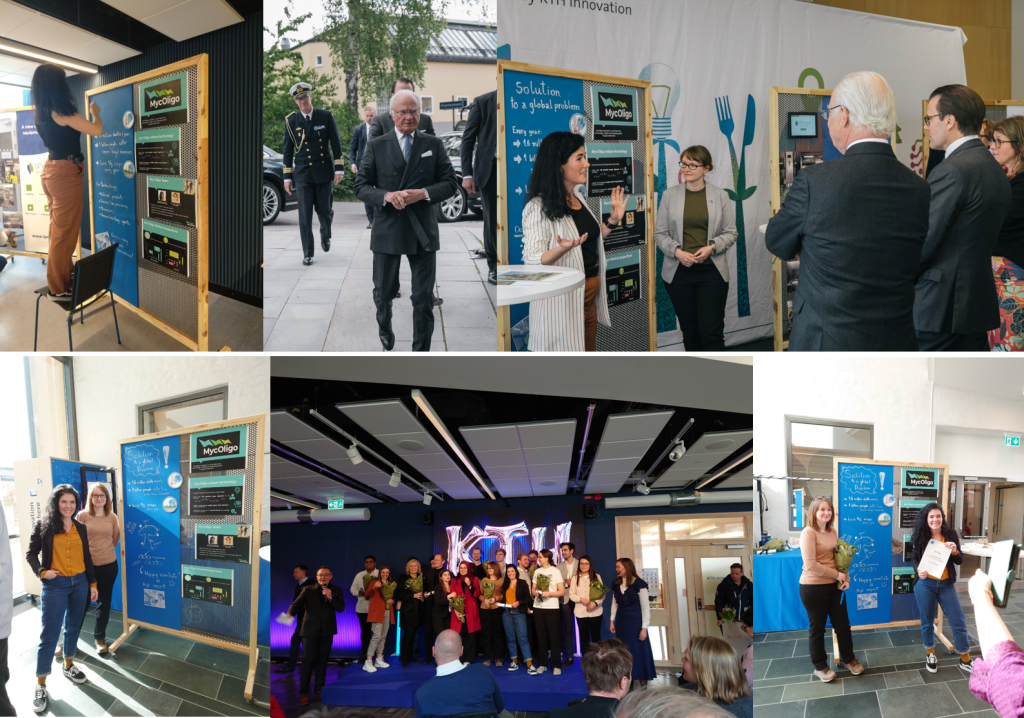
Working with my colleague Amparo, I completed the KTH Innovation Pre-Incubator Programme with our concept MycOligo. In a 12-month programme of seminars and workshops, we learned how to found a spin-off start-up company. We were awarded funds from KTH Innovation to conduct a market research survey of customer interest in our idea, and I’m looking forwards to seeing how far we can push MycOligo in the months and years to come. The photo montage below shows some highlights from our innovation journey, including Demo Day and presenting our idea to King Carl XVI Gustaf and Prince Daniel of Sweden!

My own early-stage start-up company Glycolink, of which I am the CEO, made some great progress this year. The biomaterial we are developing was recognised by the IVA as an important sustainable innovation, and in the autumn we received funding from the Vinnova research council in their Innovative Impact Startups programme! This is an important step for our young company, and will help us with product validation, up-scaling, safety testing, and sustainability assessment. I made my first commercial pitch of Glycolink to an investor group in December, and hope I can share some details in the new year! Lots to look forward to here 🙂

A montage of photos of Lauren and Amparo taken at KTH Innovation during two special events: a visit from th King of Sweden, and Demo Day for the pre-incubator programme.

Looking ahead

All in all, this year was a heavy one, with lots of pressure, but with successes to celebrate as well. A lot of special events bringing people together, several new projects to get excited about, and a completion to some long-term initiatives. We have much to be proud of this year and I hope we can keep up the momentum for 2023. I look forward to welcoming four new Master’s thesis students in the spring and can’t wait to see what you can do, Rasmus, Felise, Ida, and Piltan!

A special event in the coming year will be the PhD defence of Ioanna Sapouna – stay tuned for details! Now that she has several good publications on the way, she will be working on her thesis throughout the spring.

I want to say an extra special thank you to Alma Kvammen, our talented former research engineer who is now working in Norway, but whose incredible work ethic and scientific rigour pushed multiple projects to completion and kick-started several others. We miss you but wish you the very best of luck!

PhD position available: Sustainable biotechnology to circularise forestry waste sludge

Note: the application process for this position closed in October 2022.

In brief: We have a PhD position available in our group, ideally to start in the spring of 2023. Email Lauren with questions. Full details below. You must apply at this link: apply here.

Scientific goals: Thousands of tonnes of sludge waste are produced each year at pulp and paper mills, and we aim to find new ways to recover components from this waste. The sludge contains valuable organic materials like starch, cellulose, and lignin, but it is heavily contaminated by metals and minerals that inhibit recycling. Most sludge is therefore sent to landfill. In this 4-year PhD project, we will use isolation techniques and DNA sequencing to identify the microbial species that thrive in this harsh industrial ecosystem, and use advanced “omics” methods to reveal the enzymes used in sludge breakdown. We will characterise these enzymes to create new precision tools for the forestry biorefinery, and to clean up the sludge by removing organic matter (leaving large amounts of recoverable metals, particularly aluminium). This project will advance fundamental knowledge and reduce industrial waste, helping to move the industry towards a more sustainable and circular model. You will be based at the KTH Division of Glycoscience, and your main supervisor will be Lauren McKee. You will collaborate closely with researchers at Chalmers University of Technology in the department of Industrial Biotechnology, as you will be co-supervised by Johan Larsbrink.

Where we work: KTH Royal Institute of Technology in Stockholm is one of Europe’s leading technical and engineering universities, as well as a key centre of intellectual talent and innovation. We are Sweden’s largest technical research and learning institution and home to students, researchers, and faculty from around the world. Our research and education covers a wide area including natural sciences and all branches of engineering, as well as architecture, industrial management, urban planning, history and philosophy. The Division of Glycoscience is a multi-disciplinary department focussed on solving environmental and industrial challenges relating to sustainable production and usage of renewable natural resources, as well as advancing fundamental knowledge of complex carbohydrates.

The broader context: This project is funded by the Wallenberg Wood Science Centre. The WWSC is a research centre striving for scientific excellence, with a focus on new materials from trees. The centre creates knowledge and builds competence for an innovative and sustainable future value creation from forest raw materials. WWSC is a multidisciplinary collaboration between KTH, Chalmers, and Linköping University. The funding base is a donation from Knut and Alice Wallenberg Foundation, and the Swedish forest industry is supporting the WWSC via the national platform Treesearch. As members of the WWSC, you and your supervisors will be expected to attend the workshops that take place in the Stockholm and Gothenburg areas twice per year, where you will present updates on your research and network with colleagues. You will be invited to regular Treesearch events, giving you further chances to present about your work and get access to the national Treesearch infrastructure platform.

Education and skills development: You will perform your PhD within the scope of the WWSC Academy. As a WWSC PhD student, you will attend two week-long graduate schools per year. This programme gives you a broad and deep insight into diverse forest-related topics, and helps you build a community of students aiming towards similar goals on the same timeline as you. You will also get to visit industrial sites and areas of natural beauty around Sweden, helping you get to know the country and its landscape as well. To complement your academy training, you will take doctoral courses at KTH, including online learning, lectures, and short lab projects. In addition, you will receive formal training in scientific writing and data visualisation. As part of your research, we will help you to write funding proposals to access additional financial support for travel and experimentation, giving you an even broader range of experience in science communication. I will also encourage you to write semi-regular pieces for this blog and to use other online channels to communicate with the public about your research.

Responsibilities as a PhD student: Your primary responsibility will of course be to advance the research project and to complete sufficient doctoral-level courses to earn the 60 credits you need to graduate. Your supervisors will help you to make sure you achieve these goals on time. In addition, you will spend up to 10 % of your time on Division/Departmental duties such as being responsible for a piece of equipment in the lab. Finally, you will take part in teaching younger students. The details of teaching are decided once the PhD has begun and the amount of teaching you do will be balanced against your other roles, but typically you will do some combination of lab teaching in a course for 1 or 2 years, supervising 1 or 2 MSc thesis students, and supervising 1 or 2 groups of BSc thesis students.

Eligibility for the position: To be eligible for this position, you should have a Master of Science or Engineering degree or equivalent qualification in a relevant subject area such as biotechnology. You should have completed a practical research-based (wet lab) thesis project. Documented proof of experience in areas such as molecular biology, biochemistry, and enzyme characterisation is appreciated but not necessarily required. Please email Lauren (find my email address at my KTH profile page) if you have queries about your eligibility for the role.

How to apply: You can find further specific details about this positon on the official advert, available at this link: apply here. Please note: applications can only be considered if they are made through the KTH application portal, linked at the bottom of the advert. Informal applications made by email cannot be considered. However, you are welcome to email Lauren if you have questions or are curious about this position.

Introducing Glycolink, a new start-up company

One of the projects ongoing in our group at KTH aims to develop the use of carbohydrate-binding proteins as polysaccharide cross-linkers in hydrogels and viscous formulations. We see this technology as a sustainable, fossil-free, and catalyst-free alternative to hydrogels made from petrochemicals and chemically modifed biopolymers. In 2021, the Royal Swedish Academy of Engineering Sciences (IVA) supported this view by listing us as one of the Top 100 sustainable projects of the year.

Group leader Lauren McKee and postdoc Mengshu Hao co-founded the start-up company Glycolink AB in the autumn of 2021, with the goal of exploring commercialisation of this hydrogel technology. Our third and final co-founder is Mohamad Takwa, a serial biotech entrepeneur who has supported a number of successful start-ups. We are ably assisted by business developer Isak Edvardsson, who has worked alongside Mohamad for several years.

We filed our first patent application in November 2021 and are now pursuing several lines of basic research both at KTH and with partners. In the coming months we will be measuring the sustainability of our hydrogel-making innovation, testing the scaleability of our manufacturing processes, and screening the safety of our material for on-skin applications such as cosmetics and wound dressings.

In the earliest days of this project, I received an award from KTH Innovation that supported market research to verify the commercial viability of the material. Since 2019 our research in this area at KTH has been funded by the Swedish research council Formas. And most recently we secured a small business loan from Almi for hypothesis testing and MVP (minimal viable product) validation.

I’m sure we have a long journey ahead of us, but you can follow our progress on our LinkedIn page or company website.

Our hydrogel project is recognised on this year’s “Top 100 List” by the Royal Swedish Academy of Engineering Sciences

Post updated 14/11/2022. We have now founded a company to explore commericalisation of the Glycolink project described here. See this blog post to read about the company founding, check out our company webpage, and follow us on LinkedIn!

On May 10th, the Royal Swedish Academy of Engineering Sciences (IVA) published their selection of projects “deemed to have great potential to benefit through commercialisation, business and method development, or societal impact.” The list has a different theme each year, and for 2022 the theme was “technology in the service of humanity.”

In February this year, we submitted our biomaterials-focussed project GlycoLink for consideration for inclusion on the list, and we are delighted to be one of the 70 projects the IVA has chosen to highlight. This is a project I have been working on for a long time, since I first observed an unusual binding interaction while testing protein activity on microbial polysaccharides. In late 2019, I was awarded funding by Formas, the Swedish national research council for sustainable development, and at the time of that award I was interviewed by the popular science magazine Extrakt (article in Swedish is at this link, my approximate translation into English is at this link).

In 2020, I used the Formas award to recruit Mengshu Hao as a post-doctoral fellow, and she has been working on this project full-time since the autumn of that year. Mengshu is, like me, a biochemist by training, and it has been a learning curve for both of us to pursue this line of biomaterials research, but Mengshu has made a tremendous effort to advance our understanding of the hydrogels we can produce. We have benefitted from collaboration with Qi Zhou and Salla Koskela of KTH, who have helped us to start a detailed rheological study of our gels, and who are co-applicants on our first patent application (submitted November 2021). We have also been working closely with Johan Larsbrink and Scott Mazurkewich of Chalmers University, Gothenburg to investigate the three-dimensional structures of our binding proteins.

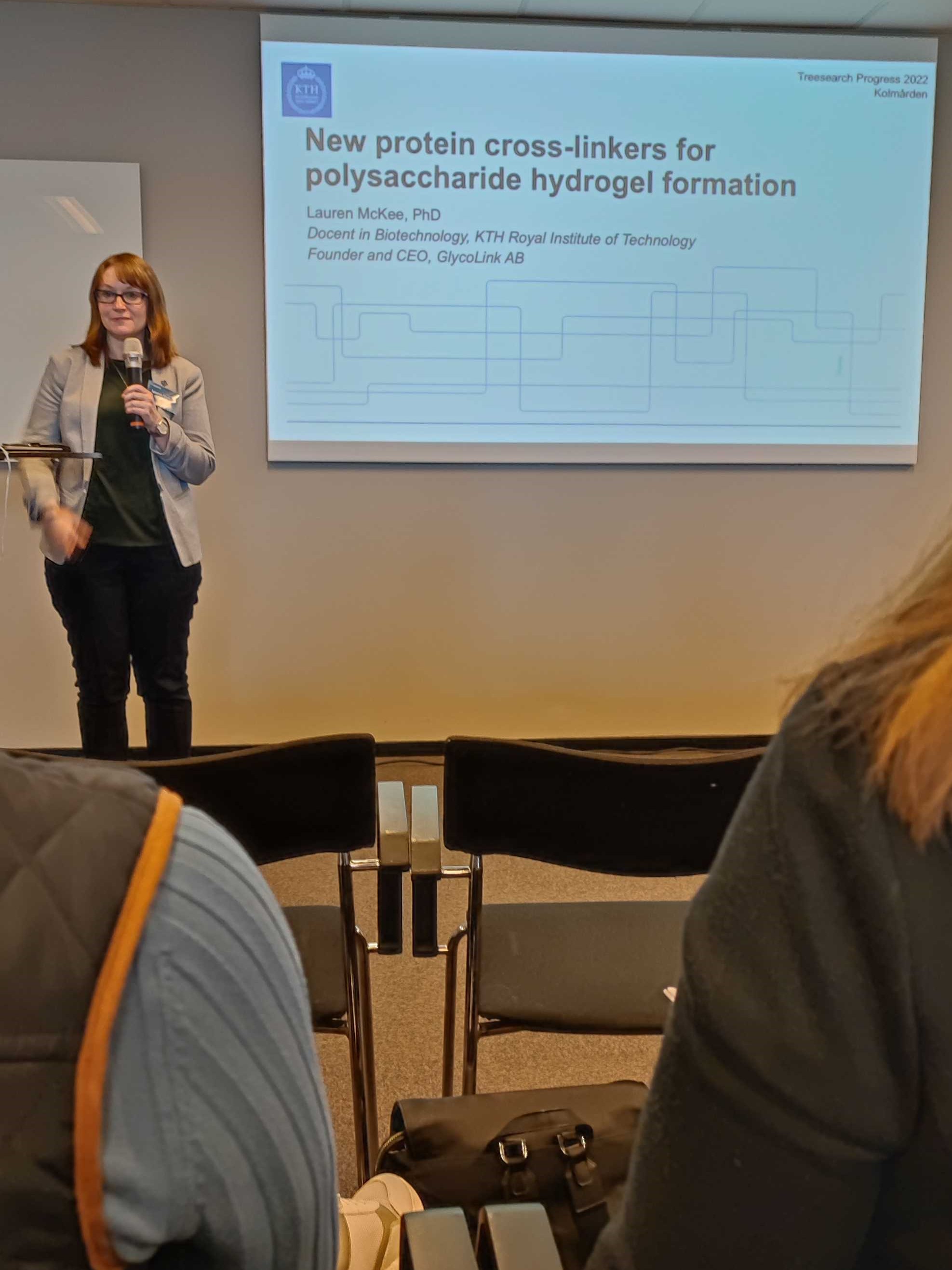
We are currently working on two manuscripts that we plan to publish as soon as possible, describing the binding proteins we have discovered, and their exploitable polysaccharide interactions. We also plan for further collaborations with scientists at KTH and Stockholm University to respectively explore the polymer chemistry and biochemistry of our system. I look forward to being able to share the data from this project with you, both in publications and at conferences. I was happy to be able to share some information on the project at the recent Treesearch Progress 2022 event held in Kolmården, Sweden, which was also the first conference that our group could attend together post-Covid.

Photograph taken by Ioanna Sapouna at the 2022 Treesearch Progress event. Image shows Lauren McKee presenting a slide entitled “New protein cross-linkers for polysaccharide hydrogel formation.”

Year in review – 2021

Hi! This is Lauren, writing our group’s first (hopefully) annual review blog! Despite *everything* I feel quite positive looking back at 2021. There have certainly been some hurdles, delays, and setbacks, due to the *everything* going on in the world. And we have all faced problems now and then, or been distracted by concerns back home. But I feel strongly that this was the year that a research group really coalesced – I love being part of this team, I am immensely proud of what we have achieved this year, and I can’t wait to capitalise on all the work we’ve done and share it with the world in 2022. I started this website in the summer when I began to feel a group identity coming to life. I want this site to be a place that brings visibility to everyone in the group, and I have been pleased that several members have taken the chance to write updates and reflective pieces for this blog! The blog is also something you can browse through to catch up on what we and our students have been doing, if you’re interested in that kind of thing. Don’t forget that if you ever have questions about us or our work, you can get in touch with me via this website, or you can find my contact details at my KTH profile page.

Research

We made solid progress in all of our major lines of experimentation this year. Mengshu’s hydrogel research is especially well advanced: we now understand how the material forms, and are beginning to assess its basic properties so we can hopefully design some applications for it. Already, Heli has established new methods for protein analysis in our lab, and her work on thermostable enzymes has some interesting results that we will build on in the spring. And Ioanna’s lignin-focussed projects have continued to become more and more interdisciplinary, as she steps outside of her chemistry comfort zone and starts to learn more about plant biology and molecular biology techniques. We are now working on manuscripts relating to all of these projects, while research continues into the new year.

Students

Supervising Master’s students for their final thesis projects is a major part of working in this lab, and 2021 was no exception. In fact, because the pandemic meant a shortage of available jobs, there were more students looking for thesis projects in the university than I ever remember! As a group, we took on four KTH students who worked January-June, and another who worked from March-September. We also had two guest students from other Swedish universities who completed 12-month thesis projects in 2021: Zijia and Amrutha both worked on some aspect of biocontrol, investigating different bacterial species to see if they might be valuable tools to suppress plant diseases.

Busy times! The KTH students worked on diverse aspects of biomaterials, bioremediation, biocontrol, and biorefinery, and I admit I found it tough to keep up with everyone’s work, so I was happy to have effective co-supervisors for all students. We also had two student interns work with Mengshu and Heli for about seven weeks. Most of our student projects were very fruitful, although some were frustrating – Amrutha learned some lessons about coping with “negative data” while still producing a fantastic thesis on plant protection.

This year I was most happy to welcome two students whose time in our lab had been long-planned and delayed by Covid restrictions! Kasane from Tokyo Institute of Technology and Beatriz from Instituto Superior Técnico in Lisbon finally joined us to perform thesis projects as exchange students at KTH. Beatriz is working with Mengshu on a hydrogels project, and Kasane is working with Heli and Amparo Jimenez Quero on a biorefinery project. I’m so happy to have them both here! They will be with us until early 2022.

Recruitment

Our group has expanded quite a lot in 2021. We had several master’s thesis students in the spring-summer, but we were also joined by three longer-term members through the year. Ioanna joined our group in April, and I will be her main supervisor for the rest of her PhD. Heli also joined us in April, for a postdoc expected to last at least two years. And in October, Alma started her position as a research engineer with our team, and I hope she will stay for at least a year, as she is already making very valuable contributions to all of our projects. Right now, we have no plans for new recruitments any time soon, although the funding landscape can change, and I am happy to discuss with anyone who can bring their own funding.

Funding

Heli wrote and submitted her first major grant application this year, a daunting but important step for any early career researcher. Fingers crossed for good news in 2022! Ioanna and Mengshu also each wrote a small proposal for an internal funding call at KTH, which was a first experience for them. I was happy in late 2021 to be awarded funds from the Carl Trygger Foundation to support the purchase of some much needed equipment for analysing hydrogels. And I was very pleased that my good friend Johan Larsbrink at Chalmers University, Gothenburg received project funding from Novo Nordisk Fonden – Ioanna and I will contribute to that exciting project in a small way, and I am always happy to have a chance to work with Johan.

Innovation

I learned a lot this year about “innovation” and the commercialisation of research: specifically, about how academic research can be translated into real industrial output, either through partnerships or via the founding of new companies. At the beginning of the year, I was one of the first cohort of KTH researchers to take part in a mentorship programme, where I was matched with a mentor who had founded his own company after doing a postdoc in Sweden, and has since gone on to start several successful biotech firms. He gave me a great practical education in how to determine whether a ‘research project’ can become a ‘business idea’, and I learned a lot from this scheme about how to talk about innovation, and about all of the non-scientific skills I would be able to transfer from my life in academia into the start-up ecosystem.

Then, later in the year, together with my friend and colleague Amparo, I joined a pre-incubator programme at KTH, where we are exploring the commercial potential of one of our joint research lines. Our ‘batch’ of start-up concepts meets on Thursday lunchtime every week, and we discuss everything from financing, business management, and branding, to project planning, building a strong team, and giving effective feedback. It has been extremely cool to hang out with a large group of innovators from fields ranging from AI and games/app development to biotech and space exploration, and it is especially rewarding to hear that these diverse teams are facing such similar challenges to our own. It has been a crash course in “business speak“, for sure, but by now we’re comfortable in the group, and are able to think and communicate coherently about our hopes and plans for the next few years. Amparo also recently joined the mentor programme to get an additional perspective on what we are doing, and you can read about both of our experiences in this interview.

In related news, Mengshu and I also have an exciting initiative in the works, but that announcement will come later…!

Looking ahead

As a group, we have mostly been initiating major new projects this year, and so we didn’t publish a lot of papers in 2021, although some Covid-delayed collaborations with other groups did see papers coming out, which was very nice. I also published an invited review in Environmental Microbiology Reports, co-written with colleagues in Gothenburg and Norway. All of our research projects are in full swing now so a big priority for early 2022 is to start publishing our work! We have two near-complete manuscripts that I want to submit in January, and advanced plans for at least two more we’ll be working on in the spring, so I hope you’ll get to read those in the not-too distant future. Working on these papers feels like an important step for the group, as they will represent our first joint accomplishments. As Ioanna has just passed her half-time evaluation, we also need to focus on guiding her towards PhD completion, wrapping up the projects that she has been advancing this year, and starting to work on the publications needed for a defence at KTH.

January-March is always a very busy time. I will have a heavy teaching load and at least three significant research grants to write, so I am happy to know that our experimental work is in the best of hands. Both Heli and Ioanna will be joined in their projects by Master’s thesis students, and I will supervise a group of students through a smaller project for a biopolymers-related course. I’m looking forward to meeting them, and giving them their first hands-on lab experience since pre-pandemic! I also hope that the world will open up enough that we can travel safely, so that we can attend at least one conference as a group. Maybe see you there 🙂

Welcome to our website!

Hello! We are the Stockholm CAZyme group, based at the Division of Glycoscience at KTH Royal Institute of Technology! We will be using this website to collate information about our group members and to share announcements about new events, publications, and updates on our work. If you want to learn about opportunities to join the group or collaborate with us, please see the Get In Touch page.

We are all passionate about complex carbohydrates like those found in plant and fungal cell walls: what do they look like, what are their properties, how are they made, and how can we use them? Feel free to browse around this site to learn more!

This site will be mostly maintained by me, Lauren – my biggest job is to make sure that everyone else on the team has what they need to do their work in an effective way. But other members of the team will be writing news updates as we progress, so stay tuned! If you wish, you can subscribe to this blog or sign up to get email alerts when we post something new.