Category Archives: General updates

Year in review – 2024

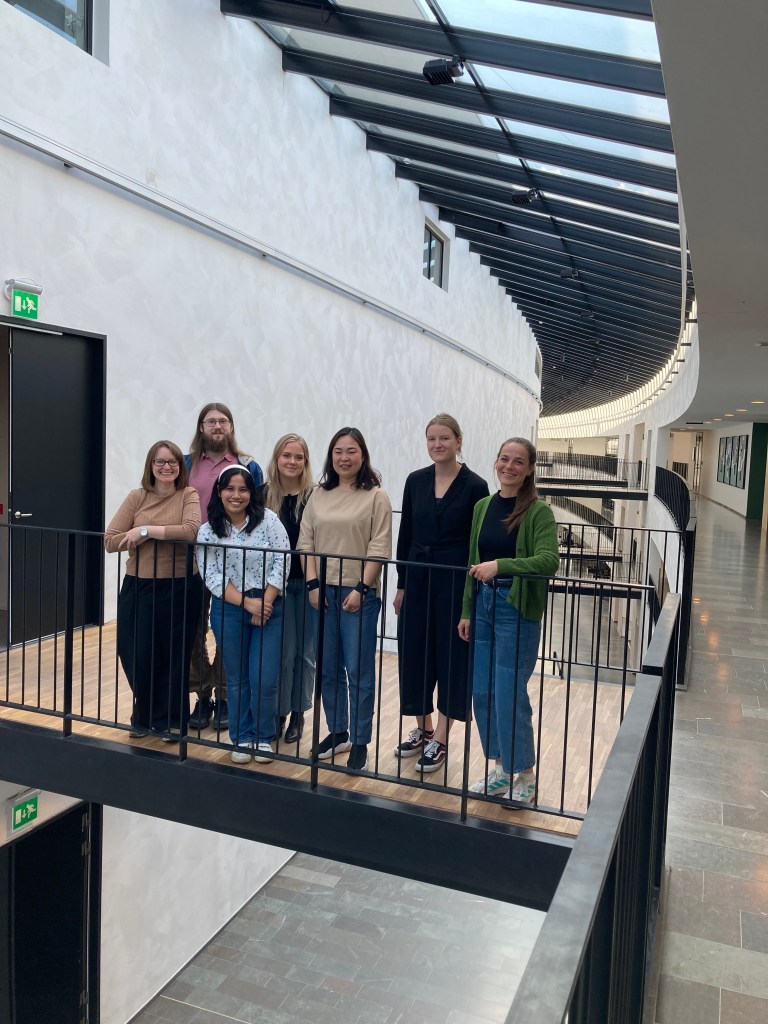
Hallo! This is Lauren again, writing our annual summary of lab activities. I guess it’s been a busy year behind the scenes, since I see this is the first blog post since 2023’s annual wrap-up! 2024 has been momentous for me personally since my efforts were focussed on securing a faculty position, aka finally getting myself a ‘real job’. After a competitive application and interview process, I am delighted to have been awarded the post of Associate Professor in Cell Wall Biochemistry at KTH Division of Glycoscience, allowing me to continue in my current department while taking an important career step. The process of applying and interviewing for this job (and similar posts in three other universities…!) has been incredibly draining, and dominated my activities to a significant extent. So I am happy to have had a great team around me whom I could rely on to keep things bubbling away in the lab. The year ended beautifully with warm feelings and celebratory moments: we caught up with friends at the WWSC Winter Workshop, I attended the PhD graduation ceremony at Stockholm City Hall, everyone gathered for a special fika to congratulate me on my Assoc Prof appointment, and then our Division hosted the Departmental Christmas party 🙂

Research

The most significant research news this year was our Nature Communications paper about family 92 carbohydrate binding modules, which you can also read about on the family’s CAZypedia page. This was a hugely important collaborative work from our team with invaluable contributions from Scott and Johan at Chalmers University, and it’s already opened some doors towards additional new collaborations. And, judging by the peer review requests I get now, I am officially “that CBM lady” (I’m okay with it). Towards the end of 2024, Pakinee and I started working on the first manuscripts from her PhD project, which we can hopefully share with you next year!

Students

Pakinee’s PhD is in full swing. She has made tremendous research progress this year, completed a lot of KTH courses and attended two week-long schools with the WWSC Academy. Erik’s Master’s thesis project was tough but taught us a lot about construct design in our engineered enzyme-CBM proteins. His work was within the context of the newly funded Vetenskapsrådet project that began January 2024. Simon joined us after summer to begin a 6-month Erasmus-supported thesis project – another tricky one, testing his protein production skills and giving him a chance to learn carbohydrate analysis. We hosted Niendy, a guest PhD student from Thailand, for three months in Autumn, where she aimed to produce and characterise three CBMs from a bizarre multi-modular GH5 enzyme that shows activity on multiple polysaccharides (CBM-depending, I believe). Niendy’s supervisor Assoc Prof Patthra Pason came for a week-long visit in November, and it was great fun to show her around as well as attending her various seminars in Stockholm. Finally, we were joined in the Autumn term by Christian for a short project, which he will resume in January for his Master’s thesis, looking at fungal cell wall-degrading CAZymes.

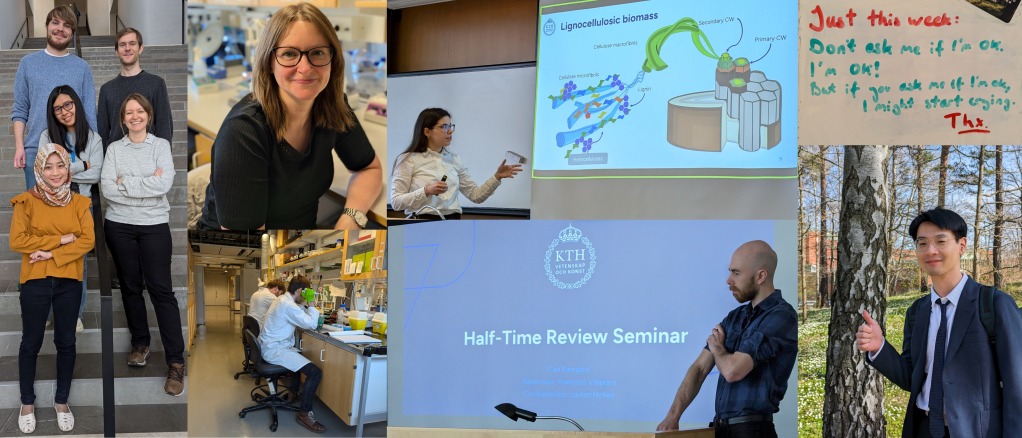
Two of the PhD students I co-supervise (both in Francisco Vilaplana’s team at KTH) passed their half-time evaluations this year, I joined the supervisory teams of some more students both at KTH and Chalmers, and we had a few PhD defences as well. It’s really fulfilling to have even a small role in the learning journeys of these brilliant young researchers.
Funding

I was so focussed on applying and interviewing for faculty positions this year, I was kind of too burned out to write a lot of big funding applications myself. However, several collaborative funding proposals were granted with partners at KTH and Chalmers University and right at the end of the year, we got news of an award from Mistra that will support new ventures in the pulp and paper sludge research project, this time collaborating with my good friend Dr Ulrike Schimpf of Stockholm University.

Innovation

Big changes at the spin-off start-up company Glycolink AB! Early in the year, I successfully pitched to private investors and secured funds that allowed us to recruit a new CEO for the company – make sure you follow us on LinkedIn to chart our progress now that Martina Banyay is at the helm! With Martina taking over the role of managing director, I have been able to transition to the much more comfortable position of Chief Scientific Officer (CSO), to which my skills are better suited. Martina is currently seeking investment to build our team and reach commercial status. Towards the end of 2024, we recruited Lovisa Brandt, a former Master’s thesis student from this group who went on to work at EnginZyme for several years, as Senior Research Engineer. She will be driving our biochemical discovery and formulation development work, as well as standardising our protocols and documentation.

Looking ahead

Since 2024 will be my first full year as Associate Professor, I’m both excited and trepidatious about what’s to come. It’s true that myself and my team will have more institutional support and that I’m able to think more long-term about how to build and maintain the group. I also foresee a lot more responsibilities now that I am a full member of the senior faculty. For example, I will have a role in assessing colleagues applying for Docent habilitation, and I’ll be a co-supervisor for at least 8 PhD students in other groups!

When I was offered the position of Assoc Prof at KTH, my Head of Department Istvan gave me some great advice that I will try to keep in mind. In the past few years as Researcher, I have had to work hard to make myself visible, jumping up and down to volunteer for things to flesh out my CV and be eligible for senior faculty roles. Now that I have my position, such responsibilities will naturally flow my way, so I need to learn to be more selective in which tasks I agree to.

I’m hoping to grow the team a bit in the coming years, and to develop new collaborations from a more stable basis at KTH. Please don’t hesitate to get in touch if you see a way for us to work together 🙂

Some good times with the WWSC this year – cheers to many more ahead!

Year in review – 2023

So, farewell then, 2023. I would describe you as having not enough vacation and too much weather.

This is Lauren writing another annual reflection of the highs and lows of life in our lab. It’s for sure been a busy year, with a lot of student projects, funding applications, travel in and beyond Sweden, and some big changes to the team. Constantly being occupied by new tasks or assignments means it can be easy to forget that some big things have happened this year. In the summer I travelled to Boston to attend the Gordon Research Conference on carbohydrate-active enzymes, where I gave an invited lecture and I hosted the Power Hour. I was both honoured and a bit intimidated when the conference organisers Tina and Nicole invited me to volunteer to organise the Power Hour session, but I think it went really well and I managed to encourage open discussion about some thorny topics. Maybe I will write a blog about that soon…

2023 also saw the beginning of the new phase of the Wallenberg Wood Science Centre PhD Academy, of which I am a vice director. There is lots of work to be done to create a compelling programme of doctoral courses for the ~50 students enrolled in the WWSC Academy, but it has been fun so far getting to know this generation of participants, and to make contact with teachers and people working in the forest industry all around Sweden. We have some exciting schools and site visits planned for the years ahead!

A small victory I am especially proud of this year – I installed some “panta” boxes in the lunch room and office areas so we can collect recyclable cans and bottles to exchange for a little bit of money. We have been able to use the income to buy ice cream for everyone on the hottest days of summer, to stock up on “emergency” lunch foods, and to liven up lunchtime with olive oils and salad seasonings. Small gestures that nonetheless bring a good feeling to the lab at lunch and fika time – and it is fun to go on the recycling expedition with a huge bag of drinks cans!

Lots to celebrate this year – victories big and small 🙂

Research

We really did well with publishing our data this year! I am so proud of the team, especially Heli and Ioanna, for bringing several projects to a satisfying resolution. On the enzyme discovery side of things, we wrote in FEBS Journal about a few pustulan-hydrolysing enzymes (most of which were not particularly efficient), in Biochimie we relayed some observations about enzyme stability, and in mSphere we described a natural cocktail of enzymes that can break down complex fungal biomass. Read more about that last paper at this link.

This year also saw several publications from Ioanna’s work on lignin. In the journal Plant Direct she revealed lignin structures secreted by plant tissue cultures, in ACS Sustainable Chemistry & Engineering she described a mild lignin extraction protocol optimised for hardwood, and in Industrial Crops & Products she showed that her sustainably extracted lignins can be used directly for making nanoparticles. Ioanna has written blog posts about these papers, which you can find here and here.

Excitingly, we also started a brand new project this year! With financial support coming mostly from the Wallenberg Wood Science Centre we are investigating the microbiome of various sorts of pulp and paper sludge wastes generated at mills in Sweden. This forms the basis of Pakinee‘s PhD thesis. We hope to find some interesting activities so we can eventually develop ways of using microbes or their enzymes to deal with the huge accumulation of sludge wastes in Sweden and elsewhere. A parallel project at Chalmers University in the group of Assoc Prof Johan Larsbrink is also running, again with financing from the WWSC, where PhD student Facundo Ortega is examining the microbiome of tree bark, another major industrial waste stream.

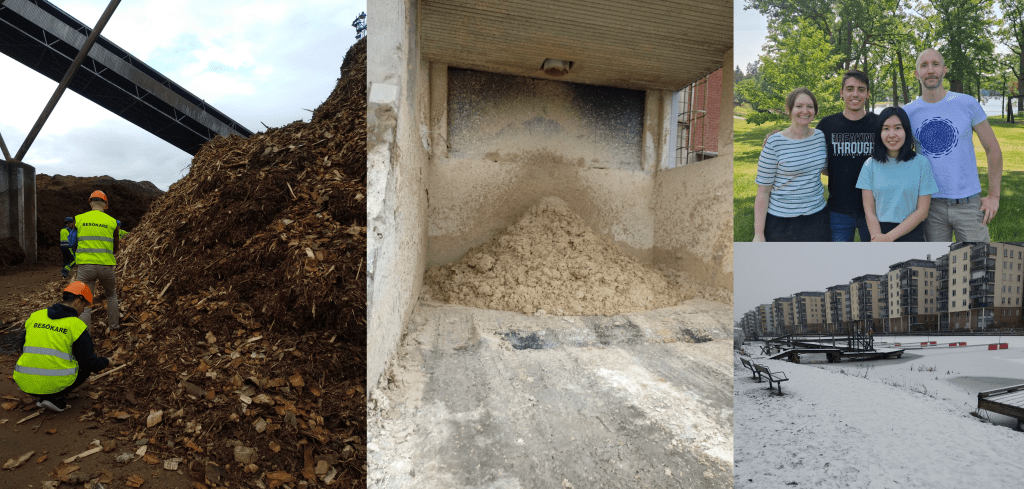
Getting out of the lab! 2023 was a good year for field trips, sampling for a student course project on water quality and for Pakinee and Facundo’s PhD studies.

Students

The big event of 2023 was Ioanna Sapouna’s PhD defence, which went extremely well! She blogged about the defence and how it feels to be moving on from studying at this link. At the Master’s level, Heli and I supervised a trio of fantastic students – Ida, Felise, and Rasmus worked on diverse projects but formed an amazing team and really supported each other through the project timeline. I also supervised Elin who was developing plant-based dairy products in Uppsala. Our guest Erasmus student Theresa Schaufler also completed her thesis work in the summer – she will defend and graduate back home at BOKU in Vienna in early 2024.

Recruitment

Our new PhD student Pakinee Thianheng arrived in June – you can read her first thoughts about studying in Sweden in this interview. We recruited recently graduated Master’s students Rasmus Gustafsson and Felise Elemia Freire to work as research engineers over the summer, and both have subsequently gone on to find full-time work in the biotech sector, at EnginZyme and AstraZeneca respectively.

Otherwise our team has been shrinking a bit this year – Mengshu’s post-doctoral period came to an end in the spring, Ioanna defended her PhD in June, and Heli started a new position in October, which she writes about in this post. However, we are recruiting a post-doctoral scholar who will hopefully begin work before the summer, and we will be joined by Erik Estreen for his Master’s thesis in the spring term!

When you work in the same place for as long as I have, you do realise that academic life is filled with constant hellos and goodbyes…

Funding

Seeking financing to support our work is always a challenge, and proposal writing is the main focus for a few months of every year. In 2023 I made it my mission to get resources to support Pakinee’s PhD project, so that she is not limited in what she can do. Her project scope is quite broad as she aims to discover new microbes and new enzymes from industrial waste, so there are a range of different potential experiments to be done. I am happy to say that several funding agencies showed an interest in the work, and we secured grants of various sizes from the KTH Life Science platform, the Lundström foundation, and ÅForsk to help buy needed equipment and to finance sequencing experiments. Pakinee also secured a travel scholarship from ÅForsk so we can attend a conference in 2024. And towards the end of the year I was delighted to be awarded funding for a 4-year project from the national research council Vetenskapsrådet. I’ll be looking into some aspects of enzyme stabilisation to better understand inter-domain interactions in modular proteins, the importance of linker length and sequence, and maybe some new routes to engineering enzymes for stability. This project is also a chance to collaborate with the company EnginZyme.

Innovation

My start-up company Glycolink hit an important milestone this year as we secured our first small investment, bringing KTH Holding AB into our team. Big thanks to Daniel Carlsson, our business coach at KTH Innovation and our contact person at KTH Holding. We also had some assistance this year from the Stockholm Material Hub, who helped us secure experimental support and commission a market research survey. Together with some pitching events I took part in, this put us in touch with some major companies working in the cosmetic and healthcare markets, so a priority for 2024 is to secure those connections into working partnerships, build our team on the technical and business sides, and secure a larger investment that will help us through the next year or so of activity.

Looking ahead

The autumn semester of 2023 was an intense period for me personally, with lots of short-notice tasks coming up that drew my attention from some longer term goals. We still have one in-review paper that I need to resubmit (I swear I am this close to getting it finished, guys!!), and the teaching prep that I normally like to do in December was still on my to-do list in January. I hope that 2024 will allow me to be more focussed and deliberate in my work. After their respective periods of maternity leave, Mengshu and Ioanna are both starting new positions this coming year, and we wish them both the best of luck! Pakinee and I plan to attend the 2024 Carbohydrate Bioengineering Meeting to introduce her to the wider CAZy community – we hope to see you there!

I had the chance to visit a number of different university campuses around Sweden this year.

Enhancing Research Depth, Broadening Influence: Two Years at the CAZyme lab

Over the past two and a half years, I’ve been part of the Stockholm CAZyme team, focusing on discovering and engineering the thermostability of enzymes, aiming for practical implementation in the realms of bioenergy and materials research. Through the collaborative endeavors of our entire team, we’ve attained some promising outcomes and published work I am proud of. However, I firmly believe there’s still ample space for refining and expanding our efforts, in order to propel our research into more profound territories.

By conducting extensive screening experiments and thorough analyses of our target proteins, our objective has been to unravel the mechanisms governing enzyme stability at elevated temperatures, and to improve their performance using engineering techniques. Building on this foundation, we’re considering innovative approaches in experimental design, analytical methodologies, and computational models to surmount existing research challenges and forge novel paths for future exploration.

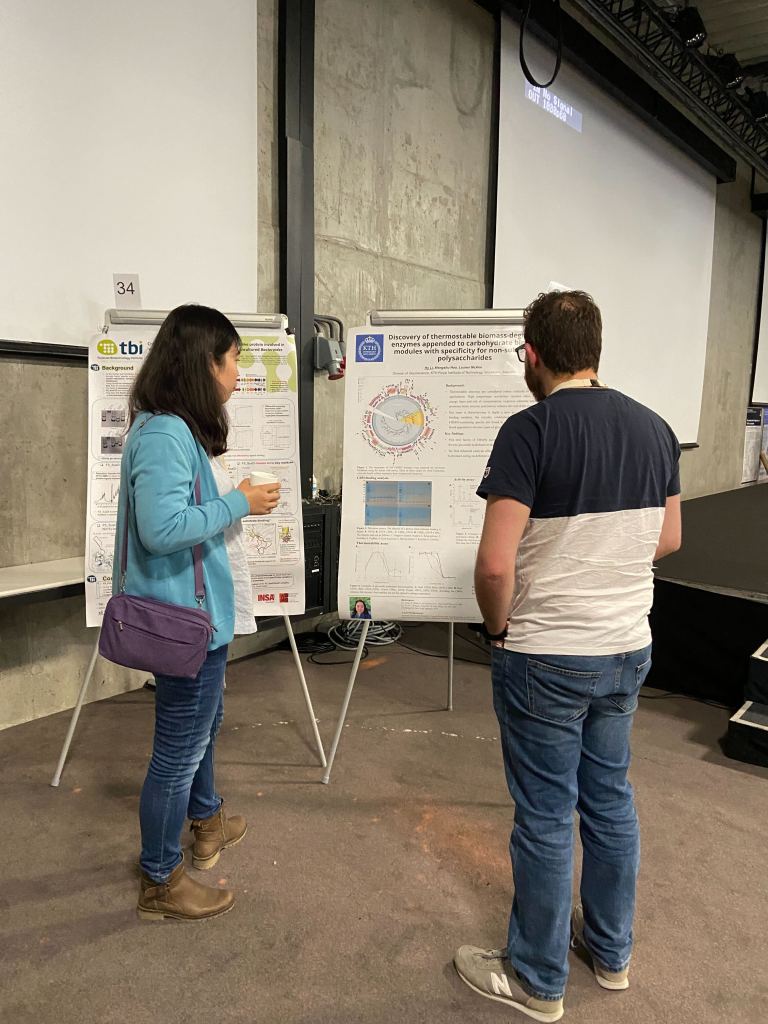
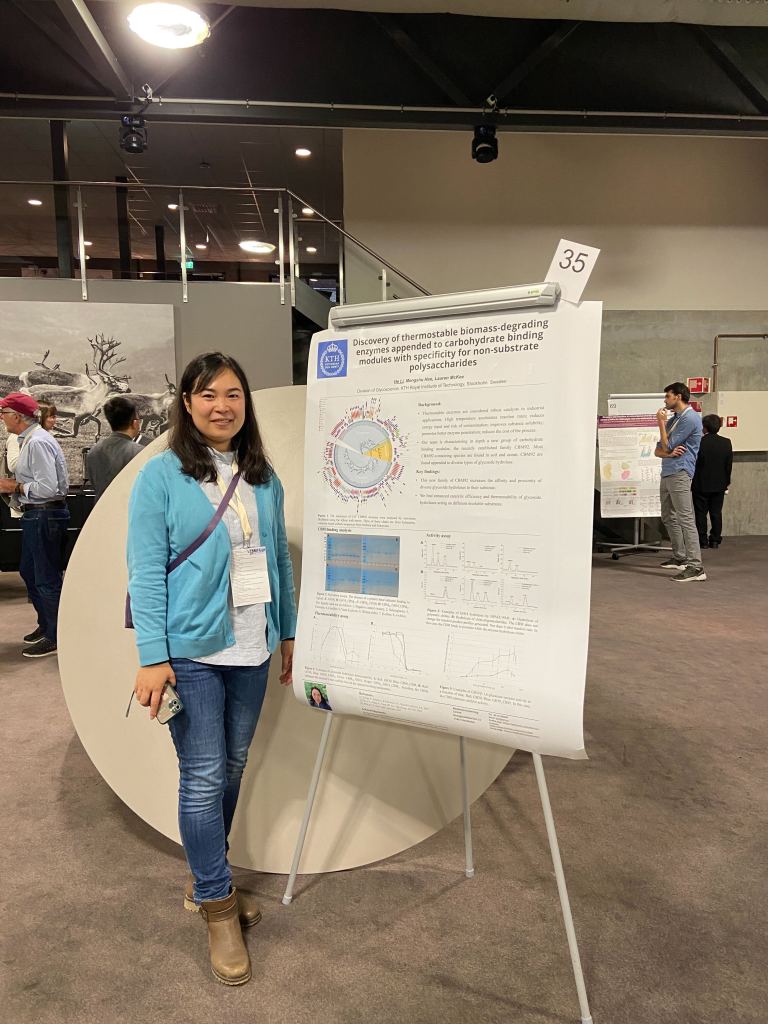
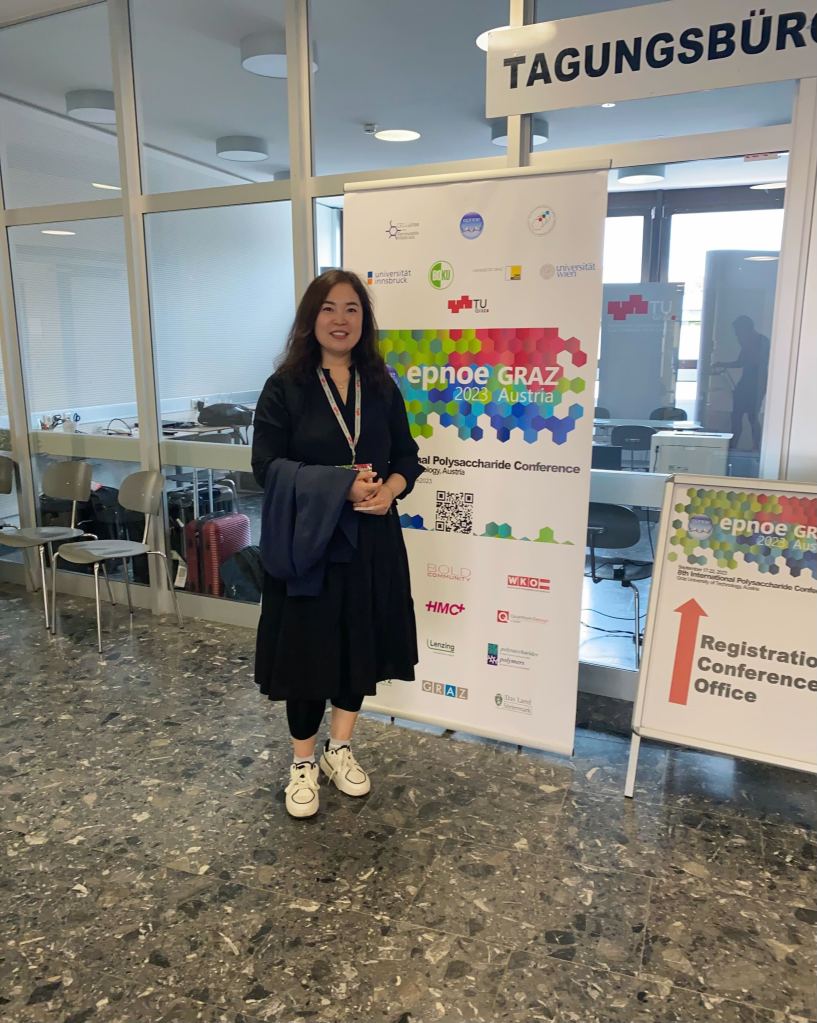
Simultaneously, we actively engage in global academic outreach, fostering in-depth dialogue with peers, showcasing our research achievements at conferences, and actively pursuing avenues for collaboration with fellow research collectives. I have been able to present my CAZyme work by poster at the 14th Carbohydrate Bioengineering Meeting in Norway and by oral presentation at the 8th EPNOE International Polysaccharides Conference in Austria. By facilitating the exchange of resources and technologies, we’re dedicated to cross-disciplinary collaboration, ultimately enhancing the reach and influence of our research endeavors, and it has been very fun to work on collaborative projects that arose during discussions at these meetings.

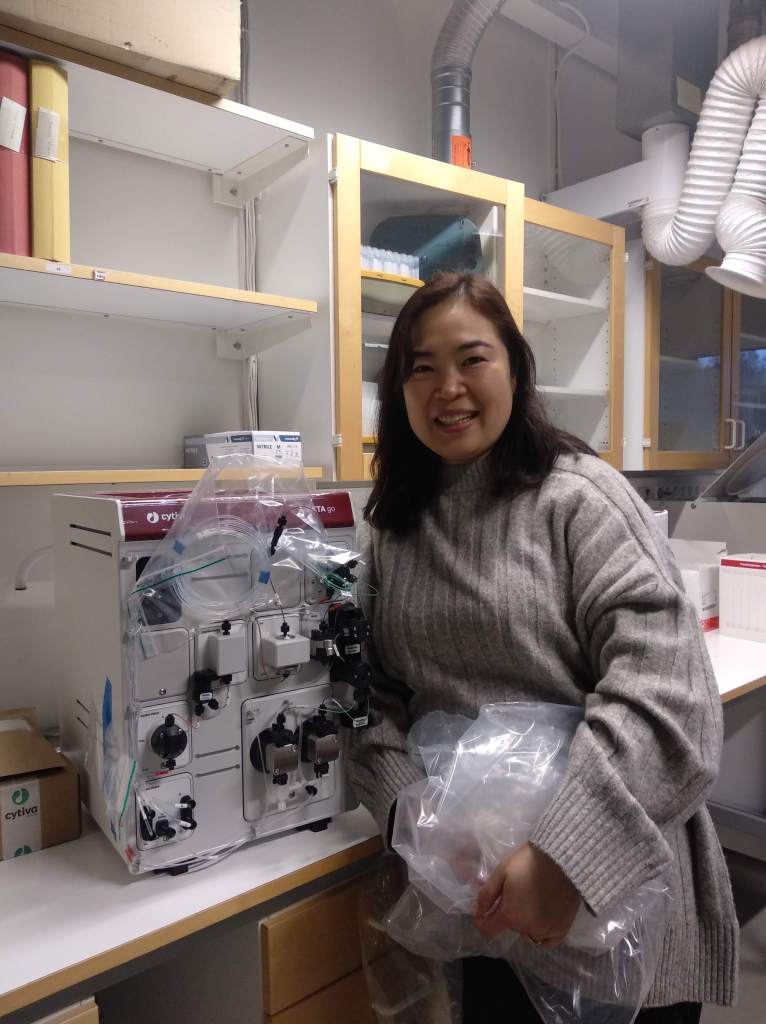
Furthermore, during my time at the CAZyme lab we’ve extended several opportunities for Master’s thesis students to immerse themselves in scientific research undertakings, cultivating their independent thinking and experimental design skills. Additionally, we’re consistently seeking new sources of research funding, aimed at supporting more extensive and comprehensive research initiatives, thereby ensuring the continuous evolution of our research pursuits. I’ve been proud to be able to bring in new advanced equipment to the lab by attaining my own funding during this time. My commitment remains resolute in advancing our comprehension and application of enzyme thermostability.

I am deeply grateful and delighted to have had the opportunity to work with all the members of the CAZyme team. Special thanks to Lauren, Mengshu, Ioanna, Alma, and Pakinee, as well as our students Lova, Vicky, Rasmus, Ida, and many others for your companionship and support. In my upcoming role, I will stay within the KTH Division of Glycoscience, where I will take an active role in setting up a new laboratory for Food Chemistry and Foodomics, contributing to the recently established KTH FOOD organization, and providing essential support for research in the field of “Biotechnology of carbohydrates from biomass”. Moreover, I am enthusiastic about the opportunity to have a more significant influence on the growth and development of doctoral students.

Year in review – 2022

This is Lauren writing our second annual progress report for the blog! Some ups and downs this year, but lots of progress as well. Heli and I attended the 14th Carbohydrate Bioengineering Meeting in Norway, and I presented our work both there and at a Treesearch Progress workshop in Sweden. Ioanna gave several presentations of her work, touring the lignin conference circuit as she prepares to settle in for the last year of her PhD. In some ways, getting people together was a main theme for the year, as we also managed to have our first proper lab Christmas party and Division Day since before the pandemic – lots of fun memories and photos!

A montage of photos taken at the KTH Glycoscience Division Day 2022. Also showing Ioanna and Lauren giving conference presentations.

Research

A big goal for this year was to publish data from the projects we have been working on for a while. So we worked hard to finalise the last few experiments for several projects, then to write up those papers, getting feedback from collaborators/co-authors, etc. There were several projects ready to be wrapped up simultaneously and the team has done a great job pushing multiple lines of research to completion! I am especially grateful to postdoc extraordinaire Heli for this, and to Alma, our former research engineer. As always though, these things took longer to finalise than hoped, so our papers aren’t out yet. But as I write this on December 30th, we have one paper accepted, two in review, and two ready to submit in the new year. I plan for a blog post discussing each paper as they are published.

Students

In the spring, two exchange students (Kasane from Tokyo Institute of Technology and Beatriz from Instituto Superior Técnico in Lisbon) submitted theses based on work they did with us in 2021-22. And in January we were joined by three KTH students on the Biotechnology Master’s programme who performed their final thesis projects with us: Emelie, Lova, and Vicky all defended successfully in early June! Emelie had been working with Ioanna on a green extraction procedure for lignin, contributing to our fundamental understanding of that important biopolymer. Meanwhile, Vicky and Lova were working with Heli on an enzyme discovery project, trying to figure out the impact of carbohydrate-binding modules on some enzymes from environmental bacteria. They stayed on as paid research interns through the summer, and generated a lot of excellent data in the process.

Theresa Schaufler from BOKU, Vienna, joined us in October with support from the Erasmus programme, to perform her Master’s thesis project in our group. She is performing the first life cycle analysis of our hydrogel biomaterial and will help us to optimise the sustainable process! I also supervised a group of five students for a project course on Biopolymers, and they helped us to understand the interactions happening in our protein-carbohydrate hydrogel system. Now we know a lot more about the properties the polysaccharide needs to have in order to work correctly in our cross-linking system.

A PhD student I was co-supervising, Salla Koskela, successfully defended her thesis in June, and it was wonderful that her supervisor Prof Qi Zhou, the examiner, and the whole defence committee were there in person. Salla’s work had focussed on enzymes called lytic polysaccharide monooxygenases and how they can be used to make nanocellulose, and you can read it at this link. Congratulations Salla! And thank you again for your important contributions to our polysaccharide hydrogel project.

This year I also really enjoyed taking part in several PhD defences, as I sat on two committees in Sweden, and was the examiner for Dr Hannah Gibson at Newcastle University, UK. Topics ranged from bacterial polysaccharide characterisation to the intricacies of CAZyme mechanisms, and all of the students were very impressive.

Photo taken by Dr Shennan Wang after the successful PhD defence of Dr Salla Koskela, third from left.

Recruitment

Our brilliant research engineer Alma Kvammen left us in July to work for an exciting company in Tromsø, Norway. Lova and Vicky were hired as laboratory assistants for three months over the summer, after finishing their respective thesis projects in the spring. I am happy to say that we are in the process of recruiting a PhD student thanks to financial support from the Wallenberg Wood Science Centre (WWSC). The application deadline for this position was a couple of weeks ago, and I plan to conduct the first interviews in January. In addition, I will be recruiting a post-doc for our hydrogel project in spring or summer 2023, so stay tuned.

Funding

This was a big year for proposal writing and we have had some notable successes, as well as a few disappointments. In early July, Heli was awarded 500 kSEK from the ÅForsk foundation for a new project on transglycosylating enzymes! We are using these funds to invest in some equipment that will speed up our enzyme discovery work. Around the same time, Ioanna was awarded two foundation grants to support her plant cell transcriptomics experiments. The awards totalled almost 200 kSEK, letting us cover the full costs of the project and related publications! As mentioned above, I was awarded financial support for a PhD project by the WWSC, and I’m excited to start this new line of investigation in 2023. New funds from the Carl Trygger foundation will be used to recruit a post-doc for the hydrogel project later in the year! As always, you can read details about all of our financing at this link.

Innovation

This was again a major focus area for me this year, and I have learned so much about the challenging journey of translating academic research into a commercial venture.

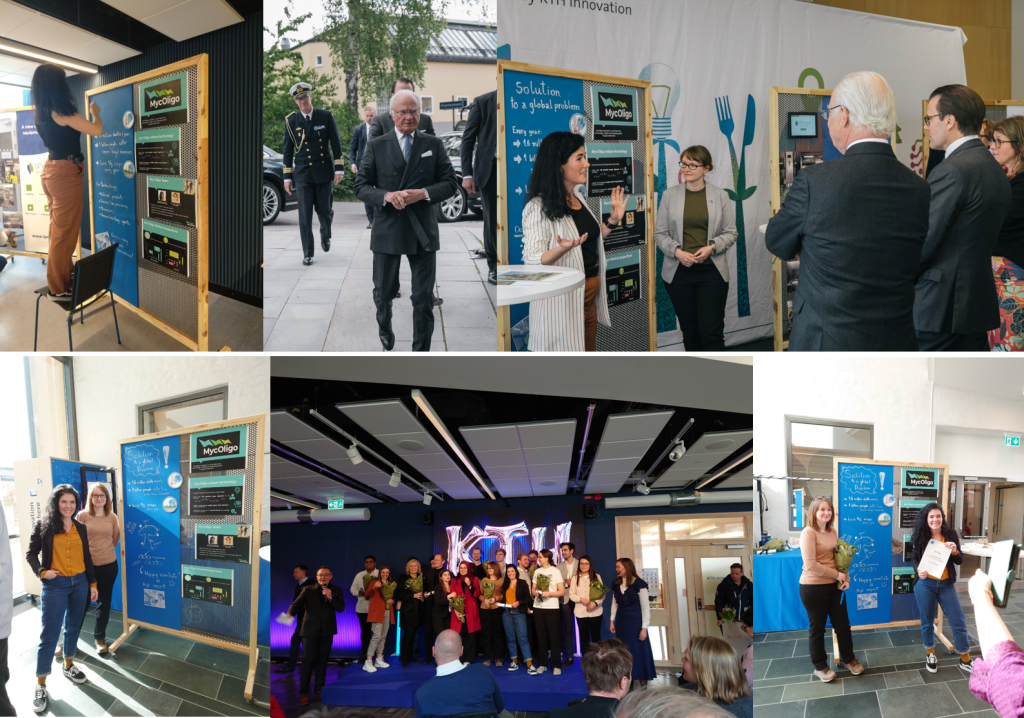
Working with my colleague Amparo, I completed the KTH Innovation Pre-Incubator Programme with our concept MycOligo. In a 12-month programme of seminars and workshops, we learned how to found a spin-off start-up company. We were awarded funds from KTH Innovation to conduct a market research survey of customer interest in our idea, and I’m looking forwards to seeing how far we can push MycOligo in the months and years to come. The photo montage below shows some highlights from our innovation journey, including Demo Day and presenting our idea to King Carl XVI Gustaf and Prince Daniel of Sweden!

My own early-stage start-up company Glycolink, of which I am the CEO, made some great progress this year. The biomaterial we are developing was recognised by the IVA as an important sustainable innovation, and in the autumn we received funding from the Vinnova research council in their Innovative Impact Startups programme! This is an important step for our young company, and will help us with product validation, up-scaling, safety testing, and sustainability assessment. I made my first commercial pitch of Glycolink to an investor group in December, and hope I can share some details in the new year! Lots to look forward to here 🙂

A montage of photos of Lauren and Amparo taken at KTH Innovation during two special events: a visit from th King of Sweden, and Demo Day for the pre-incubator programme.

Looking ahead

All in all, this year was a heavy one, with lots of pressure, but with successes to celebrate as well. A lot of special events bringing people together, several new projects to get excited about, and a completion to some long-term initiatives. We have much to be proud of this year and I hope we can keep up the momentum for 2023. I look forward to welcoming four new Master’s thesis students in the spring and can’t wait to see what you can do, Rasmus, Felise, Ida, and Piltan!

A special event in the coming year will be the PhD defence of Ioanna Sapouna – stay tuned for details! Now that she has several good publications on the way, she will be working on her thesis throughout the spring.

I want to say an extra special thank you to Alma Kvammen, our talented former research engineer who is now working in Norway, but whose incredible work ethic and scientific rigour pushed multiple projects to completion and kick-started several others. We miss you but wish you the very best of luck!

Year in review – 2021

Hi! This is Lauren, writing our group’s first (hopefully) annual review blog! Despite *everything* I feel quite positive looking back at 2021. There have certainly been some hurdles, delays, and setbacks, due to the *everything* going on in the world. And we have all faced problems now and then, or been distracted by concerns back home. But I feel strongly that this was the year that a research group really coalesced – I love being part of this team, I am immensely proud of what we have achieved this year, and I can’t wait to capitalise on all the work we’ve done and share it with the world in 2022. I started this website in the summer when I began to feel a group identity coming to life. I want this site to be a place that brings visibility to everyone in the group, and I have been pleased that several members have taken the chance to write updates and reflective pieces for this blog! The blog is also something you can browse through to catch up on what we and our students have been doing, if you’re interested in that kind of thing. Don’t forget that if you ever have questions about us or our work, you can get in touch with me via this website, or you can find my contact details at my KTH profile page.

Research

We made solid progress in all of our major lines of experimentation this year. Mengshu’s hydrogel research is especially well advanced: we now understand how the material forms, and are beginning to assess its basic properties so we can hopefully design some applications for it. Already, Heli has established new methods for protein analysis in our lab, and her work on thermostable enzymes has some interesting results that we will build on in the spring. And Ioanna’s lignin-focussed projects have continued to become more and more interdisciplinary, as she steps outside of her chemistry comfort zone and starts to learn more about plant biology and molecular biology techniques. We are now working on manuscripts relating to all of these projects, while research continues into the new year.

Students

Supervising Master’s students for their final thesis projects is a major part of working in this lab, and 2021 was no exception. In fact, because the pandemic meant a shortage of available jobs, there were more students looking for thesis projects in the university than I ever remember! As a group, we took on four KTH students who worked January-June, and another who worked from March-September. We also had two guest students from other Swedish universities who completed 12-month thesis projects in 2021: Zijia and Amrutha both worked on some aspect of biocontrol, investigating different bacterial species to see if they might be valuable tools to suppress plant diseases.

Busy times! The KTH students worked on diverse aspects of biomaterials, bioremediation, biocontrol, and biorefinery, and I admit I found it tough to keep up with everyone’s work, so I was happy to have effective co-supervisors for all students. We also had two student interns work with Mengshu and Heli for about seven weeks. Most of our student projects were very fruitful, although some were frustrating – Amrutha learned some lessons about coping with “negative data” while still producing a fantastic thesis on plant protection.

This year I was most happy to welcome two students whose time in our lab had been long-planned and delayed by Covid restrictions! Kasane from Tokyo Institute of Technology and Beatriz from Instituto Superior Técnico in Lisbon finally joined us to perform thesis projects as exchange students at KTH. Beatriz is working with Mengshu on a hydrogels project, and Kasane is working with Heli and Amparo Jimenez Quero on a biorefinery project. I’m so happy to have them both here! They will be with us until early 2022.

Recruitment

Our group has expanded quite a lot in 2021. We had several master’s thesis students in the spring-summer, but we were also joined by three longer-term members through the year. Ioanna joined our group in April, and I will be her main supervisor for the rest of her PhD. Heli also joined us in April, for a postdoc expected to last at least two years. And in October, Alma started her position as a research engineer with our team, and I hope she will stay for at least a year, as she is already making very valuable contributions to all of our projects. Right now, we have no plans for new recruitments any time soon, although the funding landscape can change, and I am happy to discuss with anyone who can bring their own funding.

Funding

Heli wrote and submitted her first major grant application this year, a daunting but important step for any early career researcher. Fingers crossed for good news in 2022! Ioanna and Mengshu also each wrote a small proposal for an internal funding call at KTH, which was a first experience for them. I was happy in late 2021 to be awarded funds from the Carl Trygger Foundation to support the purchase of some much needed equipment for analysing hydrogels. And I was very pleased that my good friend Johan Larsbrink at Chalmers University, Gothenburg received project funding from Novo Nordisk Fonden – Ioanna and I will contribute to that exciting project in a small way, and I am always happy to have a chance to work with Johan.

Innovation

I learned a lot this year about “innovation” and the commercialisation of research: specifically, about how academic research can be translated into real industrial output, either through partnerships or via the founding of new companies. At the beginning of the year, I was one of the first cohort of KTH researchers to take part in a mentorship programme, where I was matched with a mentor who had founded his own company after doing a postdoc in Sweden, and has since gone on to start several successful biotech firms. He gave me a great practical education in how to determine whether a ‘research project’ can become a ‘business idea’, and I learned a lot from this scheme about how to talk about innovation, and about all of the non-scientific skills I would be able to transfer from my life in academia into the start-up ecosystem.

Then, later in the year, together with my friend and colleague Amparo, I joined a pre-incubator programme at KTH, where we are exploring the commercial potential of one of our joint research lines. Our ‘batch’ of start-up concepts meets on Thursday lunchtime every week, and we discuss everything from financing, business management, and branding, to project planning, building a strong team, and giving effective feedback. It has been extremely cool to hang out with a large group of innovators from fields ranging from AI and games/app development to biotech and space exploration, and it is especially rewarding to hear that these diverse teams are facing such similar challenges to our own. It has been a crash course in “business speak“, for sure, but by now we’re comfortable in the group, and are able to think and communicate coherently about our hopes and plans for the next few years. Amparo also recently joined the mentor programme to get an additional perspective on what we are doing, and you can read about both of our experiences in this interview.

In related news, Mengshu and I also have an exciting initiative in the works, but that announcement will come later…!

Looking ahead

As a group, we have mostly been initiating major new projects this year, and so we didn’t publish a lot of papers in 2021, although some Covid-delayed collaborations with other groups did see papers coming out, which was very nice. I also published an invited review in Environmental Microbiology Reports, co-written with colleagues in Gothenburg and Norway. All of our research projects are in full swing now so a big priority for early 2022 is to start publishing our work! We have two near-complete manuscripts that I want to submit in January, and advanced plans for at least two more we’ll be working on in the spring, so I hope you’ll get to read those in the not-too distant future. Working on these papers feels like an important step for the group, as they will represent our first joint accomplishments. As Ioanna has just passed her half-time evaluation, we also need to focus on guiding her towards PhD completion, wrapping up the projects that she has been advancing this year, and starting to work on the publications needed for a defence at KTH.

January-March is always a very busy time. I will have a heavy teaching load and at least three significant research grants to write, so I am happy to know that our experimental work is in the best of hands. Both Heli and Ioanna will be joined in their projects by Master’s thesis students, and I will supervise a group of students through a smaller project for a biopolymers-related course. I’m looking forward to meeting them, and giving them their first hands-on lab experience since pre-pandemic! I also hope that the world will open up enough that we can travel safely, so that we can attend at least one conference as a group. Maybe see you there 🙂

Welcome to our website!

Hello! We are the Stockholm CAZyme group, based at the Division of Glycoscience at KTH Royal Institute of Technology! We will be using this website to collate information about our group members and to share announcements about new events, publications, and updates on our work. If you want to learn about opportunities to join the group or collaborate with us, please see the Get In Touch page.

We are all passionate about complex carbohydrates like those found in plant and fungal cell walls: what do they look like, what are their properties, how are they made, and how can we use them? Feel free to browse around this site to learn more!

This site will be mostly maintained by me, Lauren – my biggest job is to make sure that everyone else on the team has what they need to do their work in an effective way. But other members of the team will be writing news updates as we progress, so stay tuned! If you wish, you can subscribe to this blog or sign up to get email alerts when we post something new.